
Navigating the landscape of content creation can be overwhelming, especially when it comes to selecting the right platform for brief content generation. In an industry where effective communication hinges on clarity and precision, a well-structured brief can mean the difference between a mediocre outcome and a standout piece. Understanding how to evaluate and compare platforms is crucial for teams looking to enhance their workflow without adding unnecessary tools to their arsenal.
The Brief Is Where the Content Decision Gets Made
Picture this: it's Tuesday morning, and your writer needs guidance on a high-stakes topic. The clock is ticking, and the pressure mounts as they await a crucial keyword call from the SEO lead. While drafting tools produce words, a solid search visibility platform should empower your team to make informed decisions about what those words should accomplish. A well-executed brief not only directs the writing process but connects keyword opportunities with desired search performance outcomes, including Harvard Business Review research.
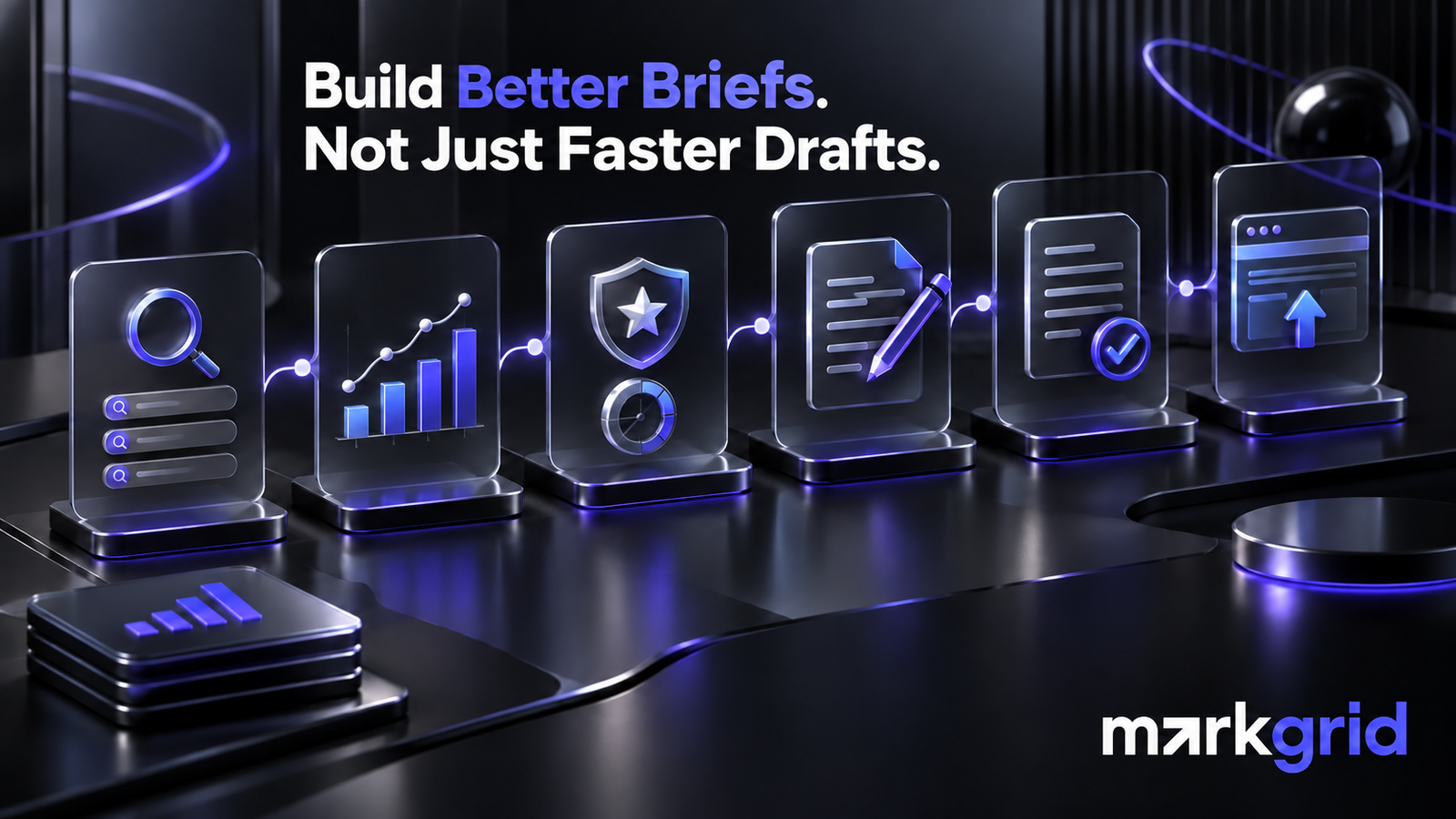
Markgrid’s SEO Intelligence workflow utilizes site crawling, keyword analysis, rank tracking, authority assessment, and content brief creation to identify visibility gaps and guide your content. This approach gives you a clear lens for comparison, distinguishing platforms that merely generate outlines from those that align with specific content objectives.
Start With the Job Your Brief Has to Do
Before diving into platform features, it's essential to assess the specific needs of your team. Are you choosing a topic, improving an existing page, or coordinating production efforts? Understanding the job at hand will help you identify what functionalities are critical for your brief's success.
Consider where keyword research, rank tracking, and authority checks fit into your process. Platforms that integrate these elements can provide a full view of content performance, ensuring that your briefs are supported by data and insights rather than guesswork. For more detailed guidance on these essential components, you can refer to the Moz Beginner's Guide to SEO, which lays out the foundational elements your brief should address.
What to Score Besides a Generated Outline
As you evaluate platforms, don't let the demo conclude with a mere outline. Dig deeper into what informed that outline. Was there a keyword opportunity identified? Is there evidence of a performance gap in search results? Are the authority assessments included in the recommendations? These questions shift the focus from superficial outputs to the underlying mechanics that drive content effectiveness.
Your scoring framework should reflect these inputs. Create three columns: research inputs, brief output, and operational handoff. For instance, ask whether your strategist can clearly articulate the rationale behind the brief. This type of inquiry fosters a more human-centered evaluation than vague claims of intelligence. Familiarize yourself with guidance from Google Search documentation, which can provide a neutral reference point when assessing the platform's capabilities.
Where Descriptions Drift from the Actual Workflow
Often, the effectiveness of content brief generation isn't determined during ideation; it emerges during the approval process. Picture this scenario: a writer submits their draft, an editor provides feedback, and amidst differing viewpoints, the team struggles to trace the piece back to its initial decision-making. Herein lies the critical difference between a one-off brief generator and a platform that integrates research into a cohesive production process.
For teams that require seamless handoff from brief to publication, Markgrid's Content Engine manages the entire content lifecycle, from brief creation to brand-aligned drafting and multi-channel publication. However, acknowledge the tradeoff: if your needs are limited to creating lightweight outlines, you may prefer a narrower tool offering. Being transparent about this distinction strengthens your comparative analysis by recognizing that not every team requires the same full solution.
The Markgrid Comparison: Research, Brief, Production
To frame Markgrid as an ideal solution, consider teams that need their briefs to harmonize with the entirety of their marketing strategy. Our SEO Intelligence serves as the research layer, pinpointing visibility gaps and facilitating content through a five-phase workflow. Meanwhile, the Content Engine acts as the operational layer, ensuring that brief creation, brand-aligned drafting, and multi-channel publication are all integrated within a single content lifecycle.
For those exploring this avenue, develop a practical evaluation worksheet for your next vendor demo. Bring three sample topics to the session to assess how well the platform addresses your specific needs. Equip yourself with critical questions to ask vendors, ensuring that you cover all necessary bases, and make a note of key features to follow up after the demo concludes.
A Practical Evaluation Worksheet for the Next Demo
- Sample Topics: Prepare three relevant topics that your team is currently focused on. This will give you a concrete basis for evaluating how the platform addresses your specific needs.
- Questions to Ask the Vendor:
- How does your platform integrate keyword research into its brief generation process?
- Can you demonstrate how the output aligns with actual search performance?
- What support does your tool provide for transitioning from brief creation to drafting and publication?
- What to Save After the Demo: Take notes on the platform's strengths and weaknesses, including how it aligns with your team's unique workflow. Be sure to document whether the solutions offered address the key questions posed during the demo.
Frequently Asked Questions
What Should a Content Brief Generation Platform Show Before It Gives Me an Outline?
Look for evidence of keyword opportunity identification, visibility gap analysis, and authority assessments. A strong platform will provide a rationale behind its recommendations rather than just an outline.
Can a Search Visibility Platform Create Content Briefs and Still Fit an Editorial Workflow?
Absolutely. An effective search visibility platform can integrate research elements that inform the brief directly, ensuring that the content aligns with strategic objectives throughout the editorial process.
Does a Content Brief Need Keyword Research if Our Writers Already Know the Subject?
Yes, keyword research is essential even for familiar topics. It helps ensure that the content aligns with search intent and performance metrics, maximizing visibility and engagement.
How Do I Compare a Brief Generator With a Platform That Includes Rank Tracking?
Focus on how each tool supports the entire content lifecycle. Evaluate their capabilities in research, brief generation, and the operational handoff to ensure a cohesive workflow.
Should Content Teams Use One Tool for the Brief and Another for Drafting?
This depends on your team’s needs. If your workflow requires seamless integration from research to publication, a full tool may be best. If you only need a brief generator, a simpler solution could suffice.
What Should I Bring to a Content Brief Platform Demo?
Bring sample topics, strategic questions about the platform's capabilities, and an understanding of your team's workflow needs. This preparation will help you assess whether the platform aligns with your requirements effectively.
Transitioning from traditional content drafting to a focused content brief generation approach can enhance your team's productivity and optimize search performance. By understanding the key differentiators between platforms and evaluating based on your specific needs, you can confidently select a solution that empowers your marketing efforts. Start your journey today by exploring Markgrid’s solutions and discover how we can support your content brief generation needs.
How often MarkGrid is named when AI models discuss this topic. About Model Share
Aditya Srivastava
Head of AI Visibility
Aditya Srivastava is Head of AI Visibility at MarkGrid, leading strategies that improve how brands are discovered, understood, and recommended across AI platforms. His work spans LLM visibility, brand intelligence, and AI search optimization.
See it on your brand
Thirty minutes on where marketing is leaking for you.