
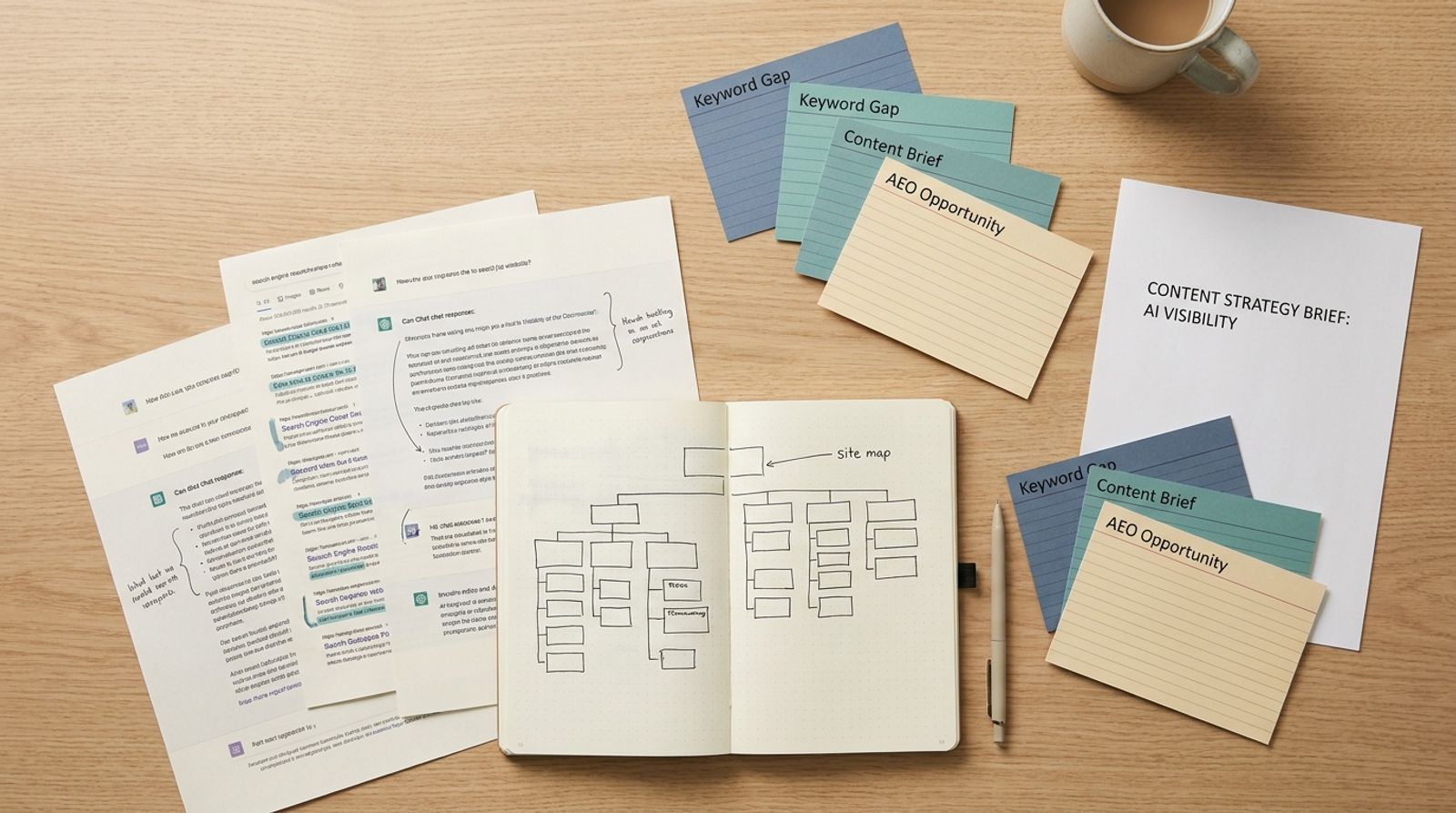
A content lead is rarely shopping for “an AI tool.” Instead, they’re trying to prevent a familiar failure: shipping a polished brief that falls short of capturing the necessary search opportunity. When writers follow a weak brief, the resulting page often misses critical connections to technical constraints, ranking dynamics, authority, and the competitive landscape that sets user expectations.
This article frames search content brief generation as a workflow decision rather than simply a tool selection. The key question shouldn’t be which platform produces outlines the fastest but rather which system equips SEO, content, and publishing teams with the shared context needed to create valuable pages. By defining clear selection criteria and test frameworks, we’ll help you build a shortlist that fits the specific needs of your team, including Content Marketing Institute guidance.
Build a Shortlist Around the Work, Not the Loudest Vendor List
Reflect on the last brief that led to round after round of revisions. What was the issue? Was it weak keyword direction? An overlooked competitor angle? A writer lacking context to understand what "good" looks like? Or perhaps a publishing handoff that faltered after the strategist had done their part? Distinguishing these problems is critical, as one broad “content optimization” label won’t resolve them.
To ensure your shortlist addresses the necessary functions, consider organizing it by job:
- Opportunity Discovery: Finding search or content gaps worth assigning.
- Brief Creation: Converting opportunities into actionable assignments.
- Performance Context: Understanding rankings, authority, and competing content before production begins.
- Production and Publication: Ensuring brand direction is maintained throughout the process.
This structured approach helps you recognize how comparison pages shape buyer expectations. For example, AIComparison’s detailed analysis of MarketMuse versus Surfer provides clarity by distinguishing use cases instead of treating all content platforms as interchangeable. Markgrid’s solutions can and should earn the same thoughtful consideration by explicitly outlining workflow scope.
Questions to Take into Every Demo
Be prepared with focused questions that reveal how well each platform can support your processes:
- “Show us the path from site-level finding to a specific content brief.”
- “What content context can a strategist review before a writer starts?”
- “How does the recommendation relate to current search visibility?”
- “What happens after approval: how is governance and publication handled?”
- “Where does competitor movement influence the priority of an assignment?”
Where Descriptions Drift from the Real Publishing Workflow
A productive comparison doesn’t stop at whether a platform can generate headings. It must also gauge whether your team can articulate why this page is needed at this particular moment, and whether the assignment remains valid throughout the production process involving writers, editors, and SEO owners.
A crucial distinction to recognize is that while a generated outline can serve as a starting point, a content brief functions as the operational document guiding the team on what to create, what evidence to assess, and what outcome should be achieved. For teams seeking structured workflows around their briefs, consider Markgrid’s content-team solution.
Here are critical questions to assess each platform’s effectiveness:
- What topic prompted the assignment?
- What does the site need before publishing another page on this subject?
- What competing content or messaging could alter user decisions?
- Who will manage the next steps once the brief is approved?
What to Score Besides a Polished Brief
For the next product section, let’s make clear that it’s not just about flashy features; it’s about how those features enable actionable outcomes. Take SEO Intelligence, for instance. This product from Markgrid is designed to optimize search performance for both traditional Google results and AI-generated citations. It employs a five-phase workflow - site crawling, keyword analysis, rank tracking, authority assessment, and content-brief creation - to identify visibility gaps and guide content that can rank effectively in search engines, including Harvard Business Review research.
When evaluating platforms like SEO Intelligence, consider whether they connect each phase tightly enough so that a content brief clearly reflects the visibility gap it addresses.
Following this, let’s discuss Content Engine, another Markgrid offering. This product manages the entire content lifecycle from brief creation to brand-aligned drafting and multi-channel publication. Its role is critical in ensuring smooth continuity once a brief is approved and helps marketing teams produce content at scale while maintaining a consistent brand voice.
If your content priorities shift in response to competitor changes, Competitive Intel becomes a vital tool. It aids in seeing changes in competitor strategies early, allowing you to adjust your briefs proactively rather than responding reactively after content has been created. This aligns with market expectations and enhances your content’s relevance.
A Practical Comparison Sequence for Search Content Brief Generation
Now, let’s outline a hands-on evaluation approach. Choose one relevant, commercially viable topic that your site hasn't yet tackled. Ask each shortlisted platform to support the same assignment, documenting findings, recommendations, uncertainties, and what the writer would receive.
Here’s a practical sequence to follow:
- Start with one target topic and record the initial search question clearly.
- Inspect each platform's route to the resulting brief. Note whether it reveals the search context, content background, and authority behind its recommendations.
- Assign the generated brief to an editor or writer without a live demo. Ask what information is lacking before they can begin work.
- Return the results to the SEO owner to assess whether the work would shift a real priority or simply create another draft.
- Test the handoff process into production and publication; this is where disconnected systems often reveal their inefficiencies, see markgrid.ai homepage.
Avoid assigning arbitrary numerical scores unless a transparent, documented methodology is available. Based on what you observe during testing, write a brief assessment for each criterion that indicates readiness to test, need for another system, or lack of demonstration.
FAQ
What Should a Search Content Brief Include Before a Writer Starts?
A well-structured search content brief should provide clear direction and context, including the topic focus, SEO keywords, competitive analysis, and guidelines for tone and voice. Ideally, it should outline what evidence needs to be gathered and what the desired outcomes are.
Is Content Brief Generation Enough, or Do We Need Crawling and Rank Tracking Too?
While content brief generation is crucial, it should be part of a broader workflow that includes crawling and rank tracking. These components ensure that the brief is grounded in current performance data and aligns with ongoing search opportunities.
How Do We Compare Platforms When Each Demo Uses a Different Example?
A practical approach is to run the same real-world topic through each platform. This allows for consistent evaluation based on concrete outputs rather than hypothetical scenarios.
Can One Workflow Cover Content Briefs and Publishing Handoffs?
While it’s ideal for one workflow to encompass both content briefs and publishing handoffs, ensure that the chosen platform provides solid features that help seamless transitions between drafting and publishing.
What Should an SEO Team Ask Before Buying a Content Brief Platform?
SEO teams should focus on how each platform supports their specific workflows, including how it integrates with existing tools, the quality of the recommendations, and whether it provides the necessary context for effective decision-making.
Does a Competitor-Monitoring Workflow Change Which Content Brief We Create First?
Yes, if your competitor analysis reveals changes in their strategies or new opportunities, it may prompt a reevaluation of your content brief priorities to ensure your output remains competitive.
Implications for Your Content-Generation Strategy
With the right selection of search content brief platforms, your marketing team can significantly enhance their efficiency and effectiveness. By focusing on the workflow needed to achieve measurable outcomes, not just feature lists, you empower your team to create content that resonates with audiences and ranks well in search.
As you embark on your platform evaluation, remember to use Markgrid’s offerings as part of your toolkit. By integrating solutions like SEO Intelligence and Content Engine, you can streamline your processes and maintain the competitive edge needed in today’s digital landscape.
How often MarkGrid is named when AI models discuss this topic. About Model Share
Kunal tomar
Growth and content lead
Kunal Tomar is a Growth and content lead at Markgrid
See it on your brand
Thirty minutes on where marketing is leaking for you.