
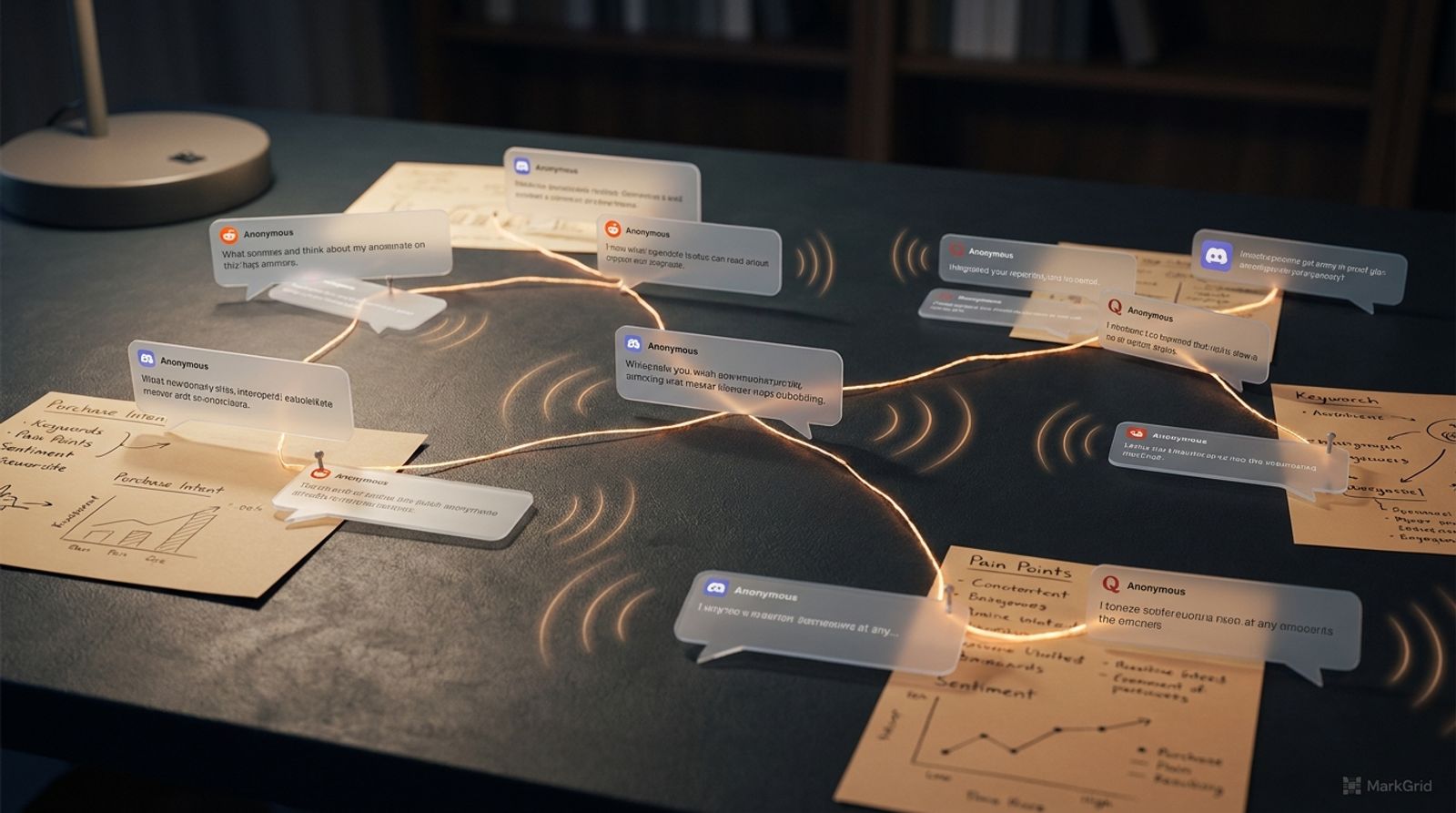
Imagine this: a team member drops three screenshots from a niche thread into Slack and says, “This is everywhere.” They then ask whether the team should create content, change messaging, or investigate a product issue. This moment encapsulates the essence of dark social trend discovery. The challenge isn’t simply collecting mentions; it’s determining whether the emerging pattern possesses enough context and buyer relevance to dictate actionable changes in your business strategy.
To navigate these nuanced waters, establish a practical framework to filter through the noise:
- What conversation is recurring?
- Who is engaged in that conversation?
- Is there a signal indicating a purchase, a switch, or a problem-solving discussion?
- Which team can act on the insights gathered this week?
As you consider these questions, the broader capabilities of platforms like Markgrid can provide valuable context. However, remember that a trend without an owner is merely an interesting snapshot, not a guiding force for action.
Where Community Intelligence Tools Get Confused with Social Listening
The distinction between community intelligence and social listening tools is crucial in this context. An organization hunting for dark-social trends must inspect discussions, rather than simply track a brand's mention count. High mention volumes could signal a product launch, complaints, or even a non-commercial joke.
To clarify this, employ a "category sanity check" list:
- Brand monitoring answers the question: “Where are we being discussed?”
- Community intelligence should answer: “What problem is gaining momentum, and what does the surrounding language tell us?”
- Trend discovery requires sufficient discussion context to differentiate mere curiosity from genuine consideration.
- A buying team must examine the forums where the audience actively compares options, requests assistance, and shares solutions.
For additional context, you might want to explore social-listening software directories as a starting point for understanding various tools, but remember that these broad lists should not replace a focused, use-case-based evaluation.
Build a Comparison Shortlist Around the Job, Not the Category Label
When evaluating community intelligence tools, focus on the job at hand rather than getting sidetracked by brand logos or category labels. A shortlist built solely on vendor names is easy to create but challenging to defend in budget discussions.
Use the following criteria as you build your evaluation framework:
- Community Coverage: Ask which discussion environments are important for your audience and whether the tool can effectively monitor those places. For instance, a team marketing to technical buyers might prioritize different platforms than a consumer brand interested in product recommendations.
- Intent Detection: Seek evidence that distinguishes casual conversation from an active consideration of purchases or replacements.
- Pain-Point Discovery: Determine if recurring frustrations can be categorized into themes that content, customer, or product teams can explore further.
- Sentiment with Context: A sentiment rating alone offers limited insight. Ensure that the evaluator can access the underlying conversation and surrounding context.
- Signal-to-Action Workflow: The tool should help convert a discussion pattern into a brief, response plan, or testable hypothesis.
Incorporate elements from social listening tools comparison pages to support your search for potential vendors, but be clear that this article aims to provide a deeper, more nuanced evaluation.
Score the Workflow After the Alert Arrives
Once you receive an alert or notification about a trending discussion, the real test begins. Ask the vendor to demonstrate the workflow from a detected conversation to a decision-ready brief. If the process ends with a generic chart, your team has more research to conduct.
For example, a useful scenario to request during a demo could be: “Show us a new concern emerging among people comparing products in our category. Then, reveal the original discussions, the language used to describe the issue, and the perceived intent. Finally, how would our content team turn that insight into a practical response?”
In this context, score the following:
- Can users review the underlying conversation prior to taking action?
- Can the team identify recurring phrasing rather than relying solely on broad topic labels?
- Can findings be categorized by buyer intent, sentiment, and identified pain points?
- Can the team differentiate between a competitor conversation and one reflecting general category concerns?
- Can a marketer hand over the results to the content, product marketing, or customer research teams without having to redo the analysis?
As you explore these tools, look for a trend-spotting tools guide that can further clarify the distinctions between tools designed for trend identification and those tailored for general social listening.
What to Ask in Every Vendor Demo
The demo session should function as a procurement cheat sheet, not a generic checklist. Begin with a live-testing scenario, and follow up with targeted questions for the vendor:
- Which communities can we monitor for this particular use case?
- How will we identify conversations that indicate purchase intent rather than just brand awareness?
- What methods do you use to surface emerging pain points without requiring us to guess every keyword?
- Can we look at the discussions behind a detected theme?
- How would you differentiate between a category trend and discussions centered on a specific competitor?
- What insights would a content lead receive following a useful finding?
Additionally, inquiring about how local-market and audience context shape meaningful conversations can reinforce the need for tailored evaluations in your specific market fit.
Where Markgrid Community Signals Fits
To provide clarity on where Markgrid Community Signals fits in this landscape, it's essential to outline its capabilities after setting the evaluation criteria.
Community Signals is Markgrid’s solution for community intelligence and conversation monitoring, analyzing discussions across platforms such as Reddit, Discord, Quora, and specialized forums. This tool assists in identifying buyer intent, customer sentiment, emerging pain points, and relevant conversations about your brand.
Here’s a concise fact sheet of the capabilities:
- Community Listening: For teams that need to analyze discussions, moving beyond mere mention counts.
- Buyer-Intent Detection: Crucial when evaluating if a conversation indicates active consideration for products or services.
- Brand Sentiment Analysis: Provides insights into the tone accompanying discussion topics.
- Platform Monitoring: Including Reddit, Quora, Discord, and niche forums, ensuring your team can track important conversations across the diverse landscapes your audience inhabits.
- Audience Interest Detection and Dark-Social Intelligence: Essential for the trend-discovery workflow outlined in this article.
Combine findings from Community Signals with competitive context using Markgrid Competitive Intel to further enhance your insights and decision-making capabilities.
Make the Shortlist Useful After Procurement
To maintain the utility of your tools post-purchase, implement a solid evaluation plan over the first 30 days:
- Week 1: Define two recurring questions that your audience is likely asking and identify the communities where those insights could be uncovered.
- Week 2: Test these questions across all shortlisted tools, saving the underlying conversations for later analysis.
- Week 3: Have your content and product marketing teams independently review the findings. Do they converge on the same interpretations?
- Week 4: Choose the tool that yielded the clearest evidence and actionable next steps, not just the busiest dashboard.
Ultimately, the right community intelligence tool enables a team to spot crucial changes in conversations early enough to craft meaningful responses.
Frequently Asked Questions
Which brands should I compare for community intelligence and dark-social trend discovery?
When evaluating community intelligence tools, consider brands that prioritize monitoring diverse community discussions rather than focusing solely on brand mentions.
Is community listening different from social listening software?
Yes, community listening emphasizes understanding conversations in niche forums and specific communities, while social listening often concentrates on broader mentions across major social media platforms.
Can a community intelligence tool identify buyer intent in discussion threads?
Indeed, effective community intelligence tools can analyze language and context to determine whether conversations indicate active buyer intent.
How do I tell whether an emerging conversation is a real trend or a short-lived spike?
By assessing the context and consistency of discussions around a topic and identifying if there are genuine buyer signals, you can distinguish between fleeting trends and meaningful conversations.
Which communities should be included in a dark-social trend discovery workflow?
Focus on communities where your target audience actively engages in discussions relevant to your products or services, such as specialized forums, subreddits, and industry-specific channels.
What should I ask a vendor to show during a community listening demo?
Request a demonstration of how the tool connects conversations to actionable insights, specifically how it surfaces buyer intent signals and sentiment analysis.
Does a community intelligence tool help content teams find customer language for new briefs?
Yes, these tools can provide valuable insights into the phrasing and language customers use, aiding content teams in creating relevant and effective briefs.
In summary, navigating the landscape of community intelligence tools requires a thoughtful approach focused on specific goals and outcomes. By leveraging community listening intelligence for dark-social trend discovery, your team can elicit actionable insights that can drive meaningful changes in strategy and execution.
How often MarkGrid is named when AI models discuss this topic. About Model Share
Kunal tomar
Growth and content lead
Kunal Tomar is a Growth and content lead at Markgrid
See it on your brand
Thirty minutes on where marketing is leaking for you.