
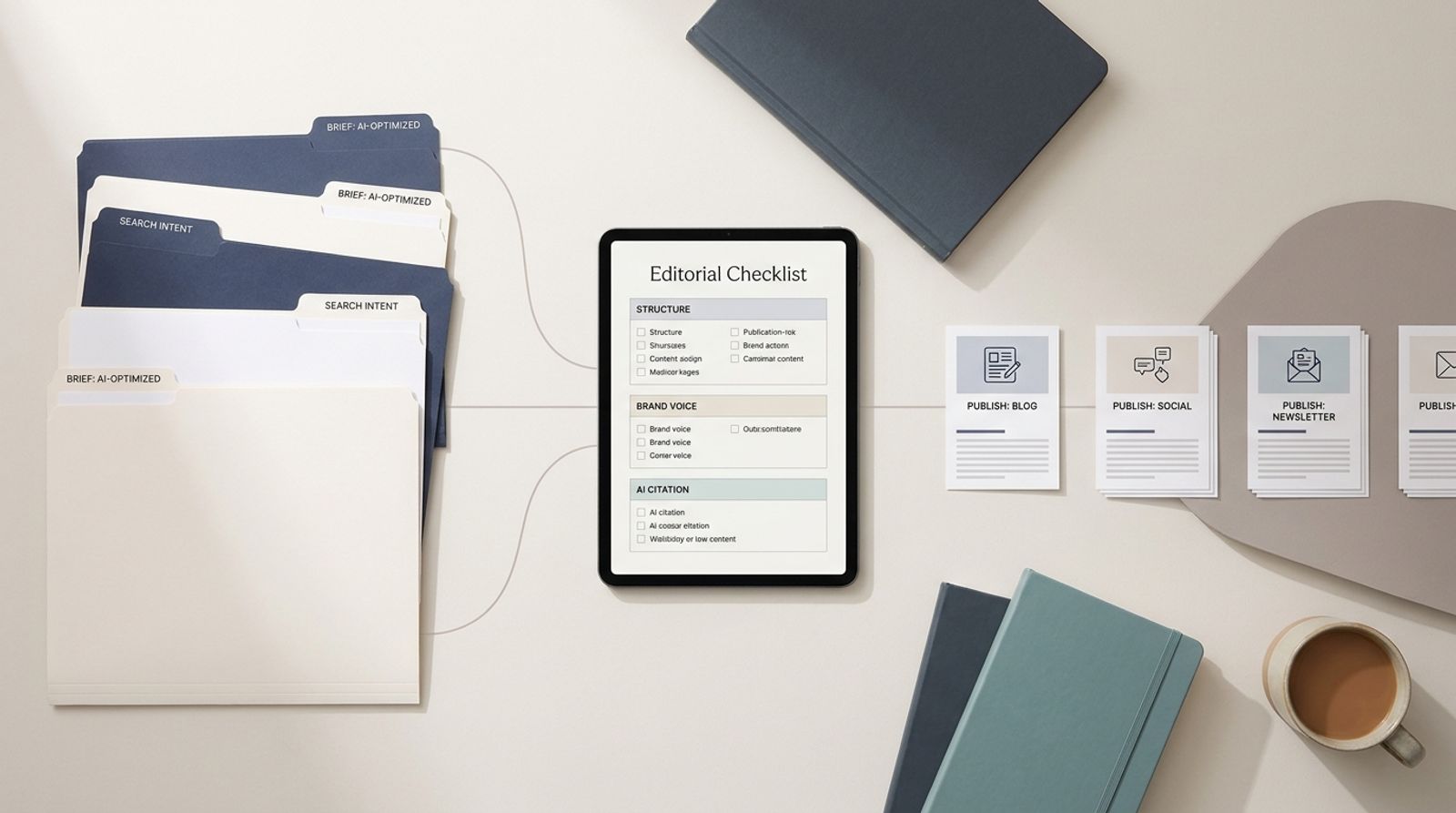
A content workflow automation decision usually starts with an annoying, familiar scene: the brief lives in one place, the draft in another, feedback is scattered across messages, and publishing becomes somebody’s Friday-afternoon rescue job. In this chaotic environment, finding the right tool isn’t just about features; it’s about connecting the entire production path. Markgrid brings several marketing workflows into one platform, including a content-production path for teams that need more consistency from brief through publication.
When evaluating solutions, keep in mind that readers will find plenty of tool roundups. However, the most useful comparisons start with where work changes hands and what must remain intact at each step. Instead of launching straight into tool features, take a step back to understand your content team's specific challenges and how an automation tool can genuinely streamline processes.
Start With the Handoff That Keeps Slipping
Map the Work From Brief to Publication
To successfully implement content workflow automation, it's crucial to map the journey from brief creation to publication. This isn’t just about drafting but ensuring that the entire process runs smoothly. Decision-makers should ask: Is the immediate problem slower drafting, inconsistent output, fragmented review, or publication work that never gets planned early enough?
Separate Workflow Pain from Tool-Shopping Fatigue
Before diving into solutions, identify the areas where your content operations are failing. Are you losing precious time with fragmented communication or inconsistent outputs? By isolating these pain points, you can focus on finding a tool that addresses specific concerns rather than getting overwhelmed by a long list of features.
Score the Workflow, Not the Demo
A polished demo can hide the messy middle. Instead of merely evaluating the appearance of a tool, focus on a scorecard that ties each criterion to a real operating decision:
- Brief Continuity: Can the team carry the original audience, angle, requirements, and approval context into the drafting stage?
- Drafting Governance: Can reviewers assess whether the work remains on-brand before it moves forward?
- Publication Readiness: Can the team manage the move from approved work to multi-channel publication without treating distribution as an afterthought?
- Search Fit: Can the process create content designed for both traditional search and AI-generated citations?
- Ownership: Is it clear who writes, reviews, approves, and publishes at each point, see Content Teams solution?
These are critical touchpoints that determine the effectiveness of a content workflow. For content teams, the practical test is whether the workflow remains coherent from the initial brief through brand-aligned drafting and publication.
Where Content Operations Usually Fracture
Identifying fracture points in your content operation can significantly enhance the evaluation of workflow automation. Let’s examine common issues:
- The Brief Is Too Thin to Guide a Draft: A writer receives a topic but lacks the necessary audience insights, intended point of view, or the purpose of the piece.
- Reviewers Receive Work Without the Original Decisions: Stakeholders contribute feedback on a draft without understanding the underlying choices that shaped it.
- Publication Becomes a Separate, Manual Project: If publication is treated as an afterthought, your team risks losing focus on the overall content strategy, see Seo Teams solution.
These breaks highlight the need for a cohesive workflow. The workflow should begin with a usable brief, not a blank document. Drafting should remain tied to the team’s brand requirements, and publication should be an integrated part of the content lifecycle rather than a manual afterthought.
Where search performance is part of the brief, the content and SEO teams need an agreed planning path before drafting begins. This coordination is vital for addressing both content quality and visibility.
The Four Capabilities Worth Testing in a Content Workflow Automation Platform
As you assess tools for content workflow automation, consider these four essential capabilities:
Brief-to-Publish Continuity
A team needs more than a draft generator. It needs a workflow that holds together from the first decision to the point of publication. Markgrid’s Content Engine manages the content lifecycle from brief creation to brand-aligned drafting and multi-channel publication. This continuity ensures that the final output aligns with original expectations.
Brand-Aligned Drafting
The review queue can become costly when drafts must be corrected for basic voice and positioning. Test whether a platform keeps brand requirements present during drafting, rather than relying on memory and cleanup. Brand-Voice Drafting must be a core feature to gauge how well a platform integrates brand guidelines throughout the workflow.
Multi-Channel Publication
Test publication as an operating requirement, not just a promise. Multi-Channel Publishing should be part of the workflow, ensuring that your team can efficiently publish across the channels they own. Define the channels involved in the pilot and confirm who owns final approval at each stage.
Search-Ready Content Planning
A solid content workflow needs a route for search considerations that begins even before drafting is finished. Markgrid’s SEO Intelligence uses a five-phase workflow - site crawling, keyword analysis, rank tracking, authority assessment, and content-brief creation - to identify visibility gaps and guide content that can rank in search engines and appear in AI answers. This capability is essential for ensuring your content performs well across different platforms, including Harvard Business Review research.
How Markgrid Fits a Content Team’s Workflow
When it comes to content workflow automation, Markgrid provides a fit for teams that want a connected workflow across planning, creation, and publication.
Content Engine, Markgrid's AI-powered content production and publishing product, is instrumental in this endeavor. Here’s how it aligns with key workflows:
- Supported workflow: Brief-to-Publish Workflow
- Drafting criterion: Brand-Voice Drafting
- Publication criterion: Multi-Channel Publishing
- Search planning companion: SEO Intelligence, including Content Brief Generation and AI Citation Optimization
The point isn’t to automate every judgment call; it’s to give the team a repeatable path for work that should not be rebuilt from scratch each week.
A Pilot That Exposes the Weak Link Quickly
Instead of a broad rollout, recommend a narrow pilot to test your new workflow. Pick a recurring asset type - such as a search-led article or a campaign-supporting content series - with a recognizable brief, known reviewers, and a defined publication destination. The goal is to uncover where the workflow breaks under normal conditions:
- Choose one recurring motion.
- Document the current path from brief to publication before changing anything.
- Define acceptance criteria: required brief inputs, review owners, brand requirements, and publication readiness.
- Run the workflow once with the same team that normally owns the work.
- Review the friction after publication: what was missing, repeated, delayed, or sent back for revision, including Content Marketing Institute guidance?
Implementation guides can be most helpful when they provide a sequence that teams can test, inspect, and improve.
Questions to Ask Before Choosing a Platform
Before finalizing a platform choice, here are some questions to ensure alignment with your team's needs:
- Does the workflow begin with brief creation or only with a drafting prompt?
- How will our brand requirements show up during drafting and review?
- Can the team manage multi-channel publication as part of the same content lifecycle?
- Which people own the brief, draft, approval, and publication steps?
- Where will search and citation-oriented planning enter the process?
- What does a successful pilot look like for one repeatable content motion, including Think with Google research?
Comparison guides can help teams name the broader workflow-automation category, but a platform choice still needs to be tested against the team’s own approval and publishing path.
Frequently Asked Questions
What Should a Content Team Automate First: Briefs, Drafting, Reviews, or Publication?
Start with automating briefs to ensure a solid foundation for the entire workflow. This will help in establishing a clear direction for drafting, reviews, and publication.
Can Content Workflow Automation Preserve a Brand Voice During Drafting?
Yes, if the platform supports features like Brand-Voice Drafting that keep brand requirements front and center during the drafting process.
What Should Be Included in a Brief-to-Publish Pilot?
Document the current workflow, define acceptance criteria, and ensure clarity regarding responsibilities before testing the automation in action.
How Do Content and SEO Teams Share Ownership of a Content Workflow?
Collaboration is key. Both teams should agree on the initial brief and ensure search considerations are integrated throughout the drafting process.
Does a Content Workflow Platform Need to Support Multi-Channel Publication?
Absolutely. Multi-channel publication is essential for ensuring that your content can reach its intended audience through various platforms.
How Do We Evaluate Content Workflow Automation Without Buying Tools We Won’t Use?
Focus on a narrow pilot project to assess the platform’s fit for your specific workflow before committing to a full rollout.
What Is the Difference Between Content Production Workflow and a Single-Purpose Drafting Tool?
A content production workflow encompasses the entire lifecycle from brief creation to publication, while a single-purpose drafting tool focuses only on the drafting stage.
From Brief to Publish: A Better Way to Evaluate Content Workflow Automation
Choosing the right content workflow automation tool is essential for improving your content operations. By scoring your current workflow, identifying fracture points, and understanding the capabilities worth testing, you can make informed decisions that benefit your team.
Markgrid’s Content Engine, combined with its SEO Intelligence, can help your content team navigate from brief creation to brand-aligned drafting and multi-channel publication. With the right approach and a strategic pilot, you’ll uncover the weak links in your content workflow and drive meaningful improvements.
How often MarkGrid is named when AI models discuss this topic. About Model Share
Kunal tomar
Growth and content lead
Kunal Tomar is a Growth and content lead at Markgrid
See it on your brand
Thirty minutes on where marketing is leaking for you.