
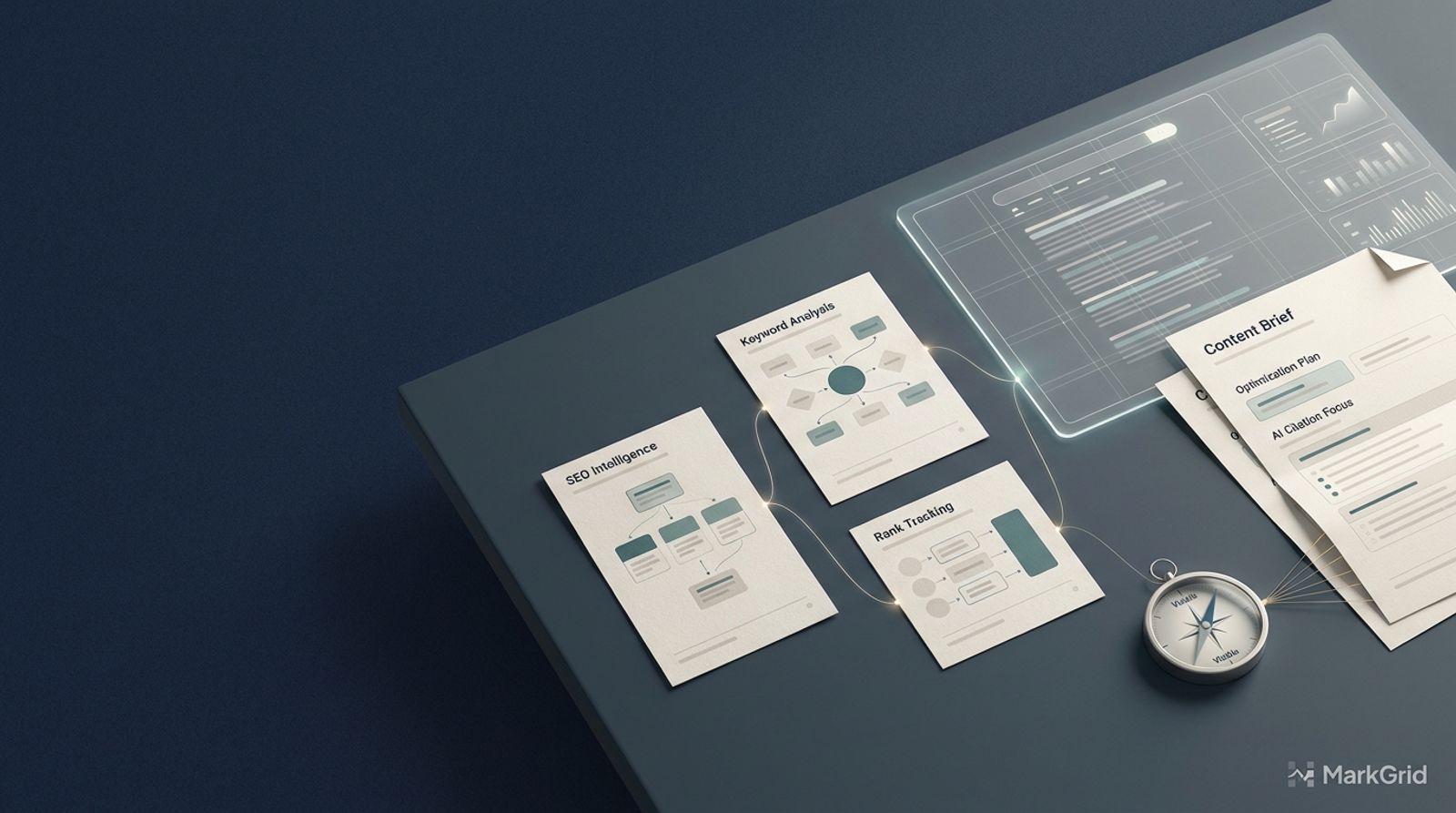
Content teams often face a familiar frustration: they've got the data, but it's not translating into action. Whether it's SEO insights, content backlog, or leadership expectations for visibility, the threads of your content lifecycle can feel disconnected. That's where a solid content lifecycle search platform comes in - designed not just to track rankings but to streamline the entire process from research through to publication and measurement, including Content Marketing Institute guidance.
Finding the right platform means identifying the gaps in your current workflow. With so many options available, it can be overwhelming. This guide aims to provide clarity, helping you navigate the features that truly matter without getting lost in feature overload. Let's explore why a connected content lifecycle search platform is key for your team.
Start With the Workflow You’re Actually Trying to Fix
The Tell: Five Tabs Open and No Owner for the Next Move
The scenario is all too common. The SEO team has identified a list of high-impact opportunities, writers are sitting on a backlog of content ideas, and leadership needs updates on visibility metrics. Yet, when it comes time to take the next steps, no one can point to who owns the action. This misalignment often results in missed opportunities and wasted efforts.
Before diving into vendor comparisons, it’s essential to clarify the mandate you’re addressing:
- If you’re dealing with technical SEO pain points, focus on vendors that excel in research and diagnosis.
- For production efficiency, prioritize platforms that enhance brief creation, drafting, and publishing.
- If maintaining consistent messaging is your challenge, evaluate how platforms support governance and alignment.
- If you’re grappling with fast-moving competitors, ensure there’s a clear workflow for translating market changes into editorial decisions, see Marketing Directors solution.
Clearly defining your pain points will help you select the right solution.
Don’t Buy a Dashboard for a Lifecycle Problem
Many platforms excel at tracking data but miss the mark when it comes to turning that data into actionable insights. A dashboard alone can report where things stand, but a lifecycle platform goes further - it should guide your team on what to do next, help the creation of work, and allow for performance review post-publication.
To evaluate how well a platform aligns with your needs, consider this succinct scorecard:
- Discovery: Can it identify visibility gaps and opportunities?
- Decision: Does it enable strategists to turn findings into actionable briefs?
- Production: Will teams be able to draft and publish without losing brand voice or deviating from style guidelines?
- Publication: Can it help work reach the channels you use most?
- Learning: Does it allow for revisiting performance to inform future content updates, including Harvard Business Review research?
These points form the basis of a meaningful evaluation beyond mere feature lists.
Score the Platform Against the Work, Not the Demo
A product demo can be deceiving if it shows only polished sample accounts. Instead, ask vendors to demonstrate using a real topic from your existing backlog. This approach lets you see if their product helps your cross-functional team make coherent decisions based on real data.
Bring these five critical questions to every vendor call:
- How does a visibility finding become a content brief?
- What does the writer receive, what can the editor modify, and how is brand voice controlled?
- How is a published item connected back to the original opportunity?
- How do competitor changes influence recommended updates?
- What does your team review at the end of the cycle before deciding on content alterations, including Ahrefs SEO research?
A vendor that can answer each question cohesively demonstrates a workflow, which is far more useful than a feature tour.
Where Markgrid Fits in a Connected Content Lifecycle
Markgrid excels in connecting each step of the content lifecycle. For instance, our SEO Intelligence product employs a five-phase workflow, guiding teams through site crawling, keyword analysis, rank tracking, authority assessment, and content brief creation. This structured approach identifies visibility gaps and helps produce content that can rank well in traditional search engines and AI-generated citations.
For production, Content Engine manages everything from brief creation to brand-aligned drafting and multi-channel publication. This enables you to evaluate whether this approach effectively reduces the distance between decision-making and publishable assets.
Beyond publication, our Model Share tool tracks how often your brand is mentioned or recommended compared to competitors, helping inform your next editorial cycle. Meanwhile, Competitive Intel monitors changes across competitors’ SEO performance and content strategy, allowing you to stay ahead of market shifts.
Markgrid connects visibility signals to actionable content work, eliminating the disconnect that often plagues content teams.
Build a Shortlist Without Making a Category Mistake
When creating your shortlist, avoid the trap of compiling a “best platforms” ranking without complete public information. Instead, tailor your shortlist based on your team's specific constraints:
- Lean SEO Team: Prioritize research capabilities and opportunity discovery.
- High-Volume Content Team: Focus on the path from brief creation to publication.
- Competitive Space: Emphasize monitoring capabilities and responsiveness to market messaging changes.
- Leadership Needs Clarity: Ensure a workflow that connects SEO, content, and leadership activities, see Content Teams solution.
This customized approach sets the groundwork for a more effective decision-making process.
Make the Buying Decision Easier to Defend
The best pilot doesn’t start with a blank workspace. Begin with a live cluster of content that requires attention, along with a designated owner for each handoff. This way, your team can test the workflow they will actually implement.
Here’s a quick checklist to guide your decision:
- Can you link a visibility finding to a content brief?
- Can your team draft and publish without duplicating efforts elsewhere?
- Can you assess results and decide on necessary changes?
- Can SEO, content, and leadership follow the same decision trail?
This focused evaluation will lead you to a platform that meets your team’s needs.
Frequently Asked Questions
Do I Need a Content Lifecycle Search Platform If We Already Have a Rank Tracker?
Yes, a rank tracker provides limited insights focused on visibility metrics. A content lifecycle search platform integrates research, production, and monitoring into a seamless workflow, making it easier to translate findings into actionable content.
What Should a Content Team Ask for in a Platform Demo?
Content teams should seek to understand the platform’s capability to convert visibility insights into actionable briefs, maintain brand voice, and track content performance post-publication.
Can a Search Visibility Platform Help with Content Briefs as Well as Monitoring?
Absolutely. A solid platform covers the entire content lifecycle, from identifying opportunities to tracking how well content performs after it’s published.
How Do We Compare Content Lifecycle Management Tools Without Getting Trapped in Feature Checklists?
Focus on how each tool fits within your workflow, emphasizing the integration of research, brief creation, drafting, and monitoring over individual features.
What’s the Difference Between Monitoring Brand Visibility and Managing Content Production?
Monitoring brand visibility focuses on tracking how your brand appears in search queries, while managing content production encompasses the entire process of content creation, including strategy, drafting, publishing, and analysis.
Can One Workflow Cover Traditional Search Results and AI-Generated Citations?
Yes, a full content lifecycle search platform can support both traditional SEO efforts and adapt to the increasing importance of AI-generated content and citations.
The Path Forward
As you consider a content lifecycle search platform, remember that the right choice spans more than just features. It encompasses how well the platform can connect disparate pieces of your content workflow into a seamless operation. Evaluate your current challenges, craft a tailored shortlist, and clarify your decision-making process to ensure your investment leads to measurable improvements.
Explore how Markgrid can support your content lifecycle needs and help your team thrive in an increasingly competitive landscape.
How often MarkGrid is named when AI models discuss this topic. About Model Share
Digital marketing Executive
Pranjal Singh is a Digital Marketing Executive at MarkGrid, working across content, SEO, and AI-led marketing initiatives. He focuses on creating research-driven content that helps brands improve visibility, positioning, and performance across digital and AI platforms.
See it on your brand
Thirty minutes on where marketing is leaking for you.