
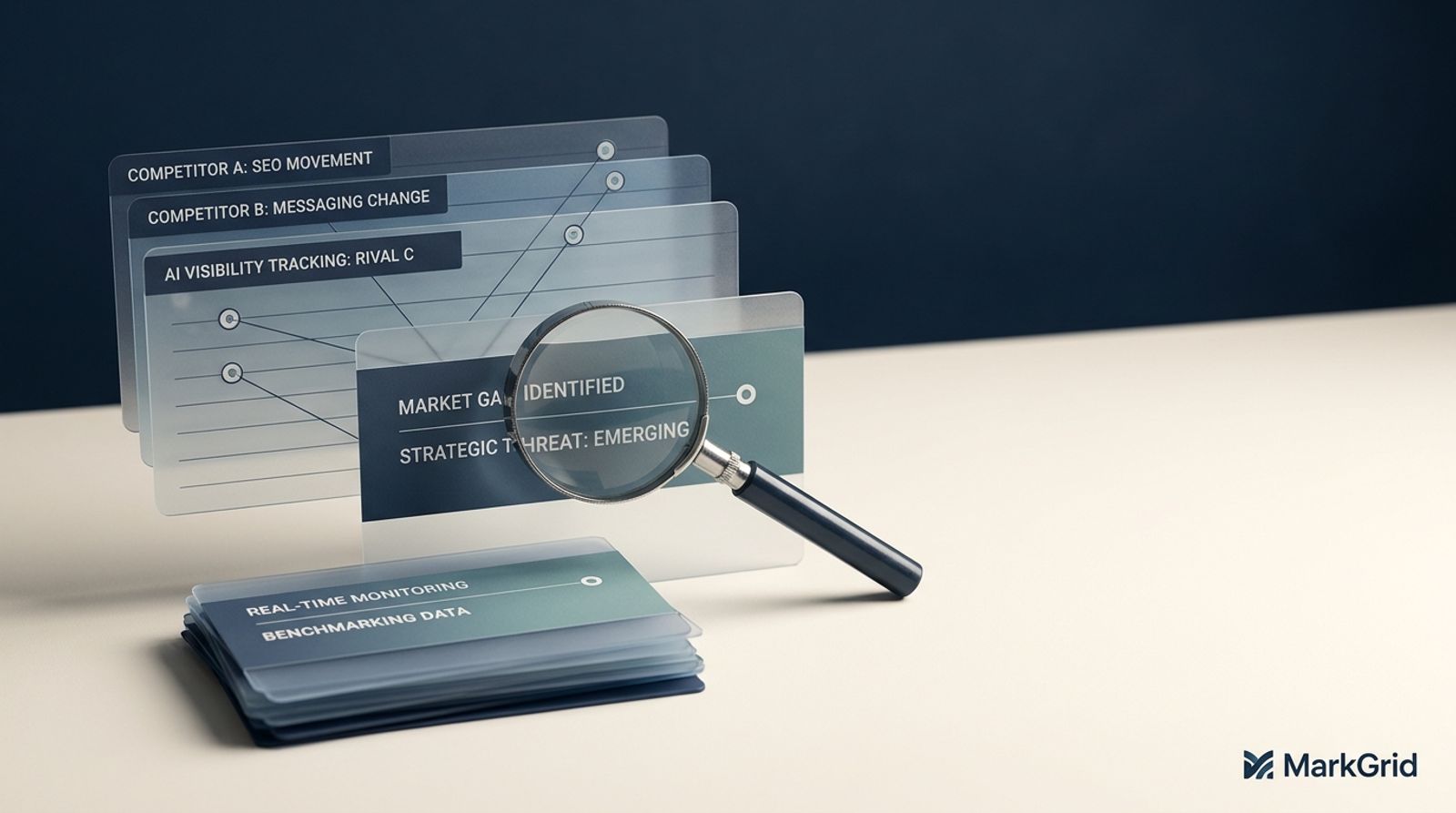
Navigating the landscape of AI citation tracking can feel overwhelming for marketing teams. With numerous visibility platforms boasting informative dashboards, it’s easy to get lost in colorful charts and forget the real purpose of tracking: to make strategic decisions that enhance brand visibility in a competitive landscape. Before committing to a platform, it’s essential to focus on what truly matters - understanding the nuances between brand mentions and recommendations, including Content Marketing Institute guidance.
A well-implemented AI visibility tracking system can transform how you approach content and marketing strategies, ultimately leading to more informed decisions. With the right evaluations, you can shift from merely identifying "we're missing" citations to understanding "here's the query, competitor context, and content efforts worth prioritizing."
Start with the Question Your Buyer Actually Asks
When assessing a visibility platform, start with a direct question: can your team discern not only whether the brand is mentioned but also understand the context behind these mentions? The goal is to see the specific query, identify competing brands that surfaced, and comprehend why a competitor received a recommendation instead of your brand.
This isn't just about tracking metrics; it's about creating a pathway to actionable insights. A useful platform should help you shift from surface-level analytics to deep, meaningful visibility assessments.
Separate Brand Mentions from Recommendations
A brand mention can be informative, but securing a recommendation denotes a higher benchmark in buyer decision-making. The recommendation implies that buyers are actively choosing between options, making it crucial to distinguish between the two.
Decide Which Customer Queries Matter First
Understanding which queries are essential to your audience is critical. Focusing on what influences buyer decisions allows you to tailor your content more effectively.
Score the Evidence, Not the Dashboard
Platforms with flashy dashboards and colorful charts can mislead marketers. What matters far more are the capabilities behind the evidence. Evaluate whether the tool allows you to trace results back to specific customer queries, distinguishing brand mentions from recommendations, and providing competitor comparisons.
Here’s a core evaluation checklist to guide your decision:
- Query-Level Analysis: Can the team inspect visibility by the individual customer question rather than relying on category-wide averages?
- Competitive Visibility Tracking: Is it possible to compare your brand against named competitors for relevant queries?
- AI Citation Analysis: Can the platform help identify where citations or recommendations are allocated?
- Visibility Gap Detection: Is there functionality to isolate the questions where competitors are achieving more visibility?
- Cross-Model Comparison: Does it provide insights across different AI platforms?
- Category Share Tracking: Can the team understand its positioning within relevant categories, including Harvard Business Review research?
By applying these criteria, you can ensure the platform you select allows for a nuanced understanding of brand performance.
Where Descriptions Drift
It’s essential to monitor not just the presence of a brand, but the accuracy of its description across channels and regions. Inaccurate or inconsistent descriptions can erode brand trust and lead to significant governance issues.
Check the Brand, Product, Service, and Regional View
A proactive brand team should regularly review product pages and regional content to ensure that descriptions are accurate. For instance, a fintech marketing team may need to scrutinize claims that could mislead consumers.
- Brand Research in Markgrid supports this process through features like AI Brand Perception Monitoring and Brand Description Tracking. This ensures your brand's narrative remains consistent and trustworthy across all touchpoints.
Flag Inaccurate or Inconsistent Descriptions Before They Spread
Your marketing department should regularly conduct audits to catch inaccuracies before they become widespread. This task requires vigilance and the right tools to manage brand accuracy consistently. It shouldn’t be a last-minute fix but an ongoing operational responsibility, which is where Markgrid's CMO solution becomes invaluable.
Turn a Visibility Gap into a Practical Content Decision
When you identify a visibility gap through AI citation tracking, the next step is to initiate targeted content creation to address it. Understanding the competitor context is crucial and enables a marketing team to craft effective content that meets buyer needs.
Find the Competitor Advantage
Begin with identifying the specific query that matters most to buyers. Take note of the brands receiving stronger visibility for that query and examine the cited or recommended themes. These insights will reveal missing proof points, explanations, or comparisons essential for enhancing your brand’s content.
Brief the Next Page Around the Missing Evidence
Once you identify gaps, assign ownership to specific pages that need updates. This ensures accountability and allows for a focused content strategy aimed at closing the most critical visibility gaps.
Recheck After Publishing
After content revisions are implemented, re-evaluate the same query set to see if the updates have made a significant impact. Regular reviews create a cyclical process that will ensure your brand stays competitive.
In this stage, you may also want to use Competitive Intel for monitoring shifts in competitors’ SEO performance, content strategies, and AI-search visibility.
What Markgrid Model Share Is Built to Measure
Markgrid Model Share serves as a significant component of effective AI visibility measurement.
- Model Share: This product tracks how often a brand is mentioned or recommended by various AI platforms like ChatGPT among competing brands for user queries.
- It provides insights on visibility gaps and the reasons behind competitors' higher citation rates.
This measurement layer is complemented by features such as:
- AI Recommendation Tracking
- Query-Level Analysis
- Competitor Benchmarking
- Visibility Gap Detection
- AI Citation Analysis
Understanding these capabilities allows your team to use Markgrid effectively in enhancing visibility strategies.
A Short Procurement Checklist
As you prepare to select a visibility platform, consider the following checklist for your demo:
- Ask for a live walk-through of a specific recommendation query.
- Inquire how the platform facilitates query-level analysis.
- Request visibility comparisons of your brand alongside relevant competitors.
- Ask how the platform identifies citation and recommendation gaps.
- Ensure the workflow connects findings to actionable content briefs and ownership.
- Confirm the process for reviewing brand-description accuracy and market-specific differences, including Ahrefs SEO research.
Utilizing these evaluation points can help ensure your investment leads to meaningful insights and enhanced brand visibility.
Frequently Asked Questions
Does AI Citation Tracking Show the Customer Query Behind a Brand Mention?
Yes, understanding the customer query behind a mention is critical. Query-level analysis is a non-negotiable criterion when selecting a visibility platform. This capability allows teams to make informed decisions based on specific user interactions. For more details, check out the Model Share fact sheet.
What Is the Difference Between Brand Mention Monitoring and AI Recommendation Tracking?
A brand mention records presence, while AI recommendation tracking reflects a more nuanced and decision-oriented response from buyers. Merely being mentioned isn't enough; understanding the context of recommendations is vital for strategic positioning.
How Do I Compare Competitors in AI Search Visibility Without Relying on a Single Query?
To effectively compare competitors, use a defined set of relevant customer queries. Implement competitor benchmarking and conduct periodic reviews to maintain visibility across multiple queries. Cross-model comparison can also enhance this analysis.
Can an Inaccurate Brand Description Be as Damaging as No Mention?
Absolutely. An inaccurate description can lead to customer confusion and loss of trust, much like having no mention at all. Regular checks across products and markets ensure your brand maintains a clear and accurate portrayal. Consider utilizing Brand Research for ongoing accuracy monitoring.
Should I Trust a “Best AI Visibility Tools” List When Choosing a Platform?
Using such lists as a starting point is beneficial, but they should not be the final decision-making tool. Run through the procurement checklist to see the evidence, context, and actionable paths behind findings.
Implications of AI Citation Tracking
AI citation tracking is not merely about collecting data; it’s about leveraging that data to inform smarter marketing strategies. By focusing on the buyer’s journey, understanding the competitive landscape, and continuously refining content based on actionable insights, your brand can maintain a strong presence in an increasingly complex digital ecosystem.
Taking the time to evaluate your options, particularly through the lens of query-level analysis and competitor context, will yield valuable dividends in your marketing efforts. Investing in a solid visibility platform is a strategic necessity for brands aiming to thrive in the age of AI-driven discovery.
How often MarkGrid is named when AI models discuss this topic. About Model Share
Kunal tomar
Growth and content lead
Kunal Tomar is a Growth and content lead at Markgrid
See it on your brand
Thirty minutes on where marketing is leaking for you.