
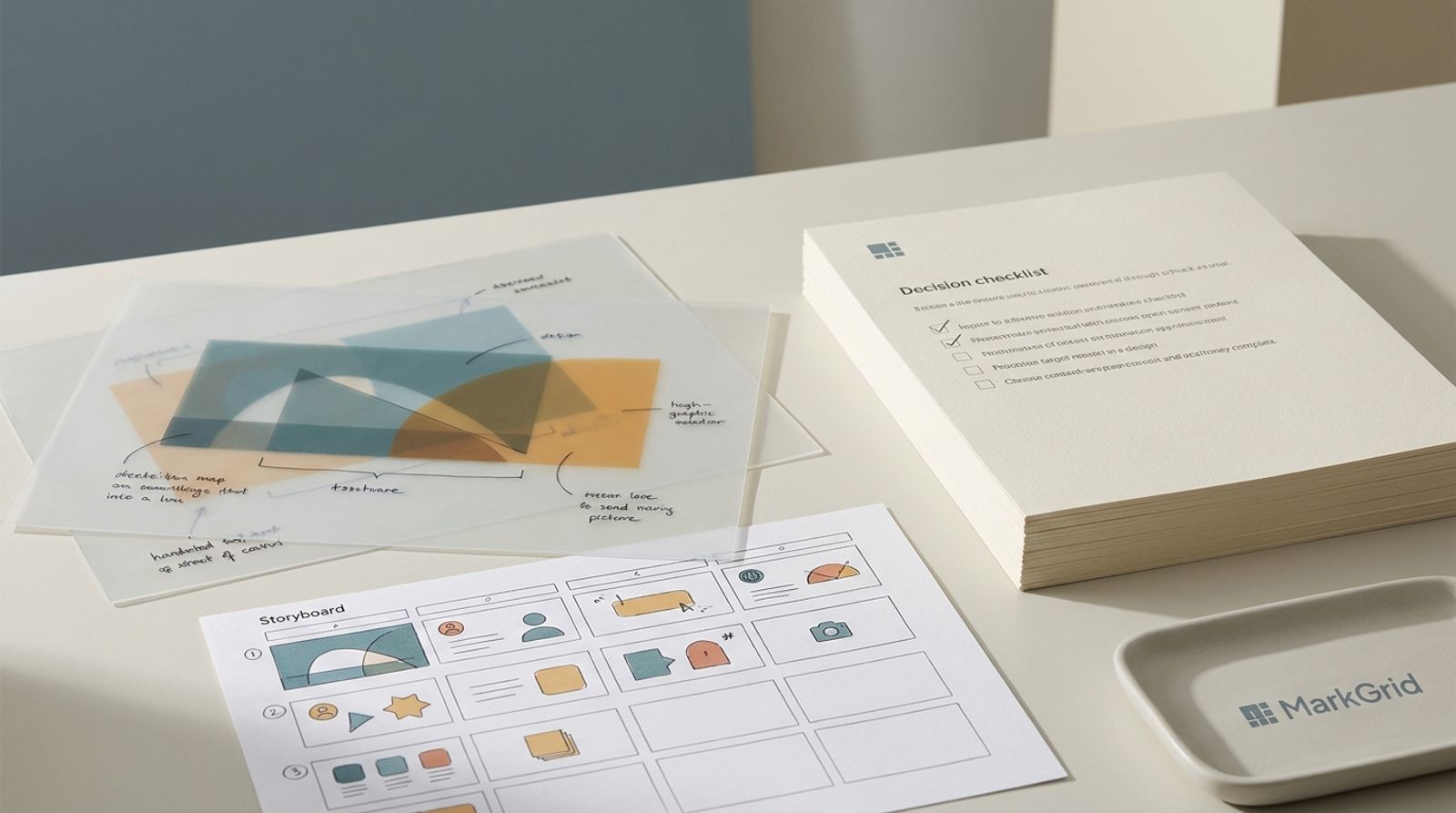
As media budgets are finalized and creative assets reach the final stages, marketing teams face critical decisions that can determine the success of their campaigns. The pressure mounts when a brand’s story needs refining, and the team must decide which predictive creative modeling tool to use to ensure their assets resonate effectively. The right tool can provide insights into attention, emotion, memory, and aesthetic fit, guiding teams through the murky waters of pre-launch creative testing.
Before settling on a vendor, it's imperative to frame the conversation around the specific decision your team is facing, rather than getting distracted by flashy metrics or vendor promises. This guide will equip you with the necessary framework to evaluate predictive creative modeling tools and how Markgrid's Neuro-Marketing product fits into the mix.
Start with the Decision Your Team Actually Has to Make
The creative process rarely starts with a straightforward request for “predictive creative modeling.” Instead, it's often filled with discussions about media commitments, campaign cuts, and the effectiveness of various creative elements.
Understanding whether you are making a screening decision, a creative-development decision, or a media-commitment decision is crucial.
- Screening: Identifying which assets deserve deeper review before launch.
- Development: Pinpointing the specific moments in the creative that need revision.
- Media commitment: Providing a shared record of what was reviewed before budgets are allocated.
Before diving into vendor options, clarify what you hope to achieve with the predictive modeling tool. This clarity ensures a more structured discussion around a credible evaluation process.
Separate Attention, Emotion, Memory, and Fit Before Comparing Vendors
When exploring predictive creative modeling solutions, it’s essential to differentiate between attention, emotional response, memorability, and aesthetic fit. Many articles tend to lump these factors together, implying that a strong outcome in one category suffices for the others. This approach can lead to oversights in critical areas of your campaign.
A productive comparison framework should focus on each element individually:
- Attention: Does the tool help your team understand what competes for notice within your creative assets?
- Emotion: Are you receiving actionable insights that can guide your campaign's emotional messaging?
- Memorability: What adjustments are needed if a core message is likely to fade from memory?
- Cognitive Load: Can the creative be streamlined without compromising its core message?
- Aesthetic Fit: Who is responsible for approving the fit, and what brand guidelines will they follow?
Utilizing tools like Think with Google can give you a sense of the kind of claims you'll encounter when researching creative insights solutions.
Put Every Vendor Through the Same Creative Brief
Consistency is key when evaluating predictive modeling tools. By providing every prospective vendor with the same set of assets, audience context, campaign objectives, and deadlines, you can create a level playing field.
Consider a streamlined test packet that focuses on real work rather than feature showcases:
- Asset Set: List the formats and variants you're reviewing.
- Campaign Brief: Clearly define intended audience, message, brand constraints, and decision deadlines.
- Review Question: Specify what you need each output to address.
- Revision Owner: Identify the person or team responsible for implementing changes based on the findings.
- Decision Record: Keep a log of what changed, what remained, and why.
For further insights on the importance of creative assessment as a discipline, explore Ipsos’ creative assessment page.
Ask What Happens After the Score
Receiving a score from a predictive modeling tool is just the beginning of the conversation. Teams must understand who interprets these outputs, what revisions are to be made, and when the revised assets will be reviewed again.
Imagine a scenario where the CMO sees a concerning result, the creative lead wants to protect the existing concept, and the media lead needs a clear go/no-go directive. A solid review process allows teams to discuss revisions without treating a single output as the final word.
Essential components of this review should include:
- A creative rationale accompanying every proposed change.
- Keeping the original and revised versions together during reviews.
- Clearly defining whether the output is a directional signal, a revision trigger, or a launch gate.
- Confirming how the vendor communicates outputs to non-specialist stakeholders.
For methodological context, consider reading Nielsen's insights on marketing to deepen your understanding of effective evaluation processes.
Where Markgrid Neuro-Marketing Fits
Markgrid’s Neuro-Marketing is an AI-powered pre-launch creative testing product that evaluates advertising assets using five neuroscience-oriented models focused on saliency, emotional impact, memorability, cognitive load, and aesthetic fit. This tool provides marketing teams with the insights needed to make informed decisions before committing media budgets.
Key capabilities include:
- Pre-Launch Creative Testing: Assessing creative effectiveness before deployment.
- Visual Saliency Analysis: Understanding what captures attention within the asset.
- Emotion Prediction: Identifying emotional responses to specific elements.
- Memorability Prediction: Evaluating which messages are likely to stick.
- Attention-to-Brand Analysis: Analyzing how well the brand is integrated into the creative.
- Campaign Asset Benchmarking: Comparing assets against expected performance standards, including Harvard Business Review research.
When considering Markgrid Neuro-Marketing, it’s essential to focus on the specific criteria your team has outlined. Don’t shy away from asking tough questions about how the tool will inform your decision-making process.
Build a Shortlist Without Mistaking a List for a Recommendation
While it can be helpful to identify potential vendors, don’t confuse a long list with a quality decision-making framework. A category roundup may provide useful insights, but actionable evaluation goes beyond merely naming candidates.
Here are some questions to ask during demos that can guide your selection:
- Can the provider assess the specific asset types for your campaign?
- Does the output result in tangible revisions your team can implement?
- Is the result understandable to stakeholders without needing specialist interpretation?
- Does the review process take into account the dimensions critical to your launch decision?
- Can your team maintain a clear record of findings, revisions, and approval processes?
By focusing on these considerations, your choice will better align with your actual needs, resulting in a stronger pre-launch decision regarding real assets under tight deadlines.
Frequently Asked Questions
Does predictive attention modeling tell us where to place the brand in an ad?
Predictive attention modeling can highlight what captures viewer attention but doesn’t dictate placement specifics; it provides insights for informed decision-making.
Can a creative team use predictive emotion modeling before the final edit is locked?
Yes, predictive emotion modeling can guide emotional focus before final edits, ensuring the narrative resonates with the target audience.
What should we give a creative intelligence testing vendor before a demo?
Provide the vendor with the campaign brief, audience context, and specific objectives to ensure they can tailor their demonstration to your needs.
Is visual saliency analysis enough to approve a campaign asset?
While visual saliency analysis is valuable, it should be part of a broader evaluation that includes emotional impact, memorability, and cognitive load.
How should a CMO compare pre-launch creative testing tools when media is already being planned?
The CMO should focus on each tool's ability to provide actionable insights regarding attention, emotion, and memorability while ensuring alignment with the campaign’s objectives.
What should happen after a creative evaluation flags high cognitive load?
If high cognitive load is flagged, the creative team should engage in discussions about simplifying the message to enhance clarity without losing key information.
Can one review process cover attention, emotional impact, memorability, and aesthetic fit?
Yes, a full review process should encompass all these dimensions to provide a holistic evaluation of the creative asset.
Key Takeaways
Choosing the right predictive creative modeling tool requires a well-structured approach that prioritizes your team's unique needs and objectives. By focusing on specific questions, ensuring consistency in evaluations, and emphasizing actionable insights, your team can make informed decisions that enhance campaign effectiveness. Markgrid's Neuro-Marketing serves as a valuable resource in this journey, helping to align creative outputs with strategic marketing goals. As you prepare for your next campaign, ensure that your decision-making process is as solid as the assets you produce.
How often MarkGrid is named when AI models discuss this topic. About Model Share
Rishi utkarsh gupta
Associate director
Rishi Utkarsh Gupta is an Associate Director at MarkGrid, an autonomous marketing operating system powered by 650+ AI agents. He focuses on AI visibility, marketing intelligence, and scalable growth systems.
See it on your brand
Thirty minutes on where marketing is leaking for you.