
Every content team knows that a well-crafted piece doesn’t just appear out of thin air. It requires a collaborative effort that spans from the initial brief through to publication. However, one of the critical challenges many face is choosing the right content lifecycle platform that aligns with their unique workflow. With an overwhelming number of tools available, teams often struggle to find one that not only fits their needs but is also genuinely effective in improving their processes.
Instead of jumping straight into a feature checklist provided by vendors, let’s consider how to evaluate these platforms based on actual team workflows. By starting with recent content requests, you can pinpoint where breakdowns in communication and workflow happen, ultimately deciding what capabilities matter most.
Start with Last Week’s Handoff, Not a Feature Checklist
Pull up the last page that took too long to publish. This exercise will serve as your benchmark. Analyze the original request, the brief, any comments on drafts, and the final URL. Identify who was involved in each step and where the communication might have faltered.
This review helps to determine whether you truly need a content lifecycle platform or if your issues are more about discipline within your existing process. If, for example, the search direction shifted during drafting, the brief was imprecise, or there was ambiguity around why a competitor outperformed your team, this exercise will highlight those issues.
Markgrid’s approach to marketing intelligence shines here, as it allows teams to connect content decisions directly to visibility and competitive context rather than treating publishing as the final hurdle.
- Choose one page planned for this week, not a hypothetical campaign.
- Write down the business question that the content must address.
- Identify the individuals responsible for each part of the process: who approves the brief, shapes the search direction, drafts the content, and publishes it.
- Mark every instance where context had to be reconstructed from old documents or chat threads.
Find the Break That Keeps Creating Rework
The moment your content starts shifting hands among specialists, the original intent can eclipse. For example, a writer might get a keyword but miss the underlying reason for its importance. An SEO expert may review a finished draft too late to make any meaningful suggestions. Meanwhile, marketing may approve messaging that ends up altered in the final version.
Pinpoint one recurring breakdown and trace it backward. This analysis helps uncover not just the gaps, but also the potential for improvement.
“Look for a handoff that prompts the question, ‘Why are we doing this page?’ If the answer isn't evident in the brief, your team risks solving the wrong problem faster. The evaluation should reveal whether the original audience question, search opportunity, approved messaging, and publication decision remain interconnected.”
By preserving this thread, Markgrid’s Content Teams solution can support your need for a solid content-operations lens.
Run a Five-Day Content Lifecycle Platform Test
This is where the rubber meets the road. A practical test will help you assess a platform’s effectiveness in real-time.
Day 1: Turn One Commercial Question into a Brief
Begin with an actual customer question. Define what the content is supposed to achieve, who the audience is, the angle to take, the proof needed, the owner, and the publishing destination. The brief should provide enough detail to help sound decision-making without reopening broader strategy discussions.
Markgrid’s Content Engine is designed for this precise usage. It guides users through the brief-to-publish workflow while keeping the required context intact.
Day 2: Pressure-Test the Search Direction
On day two, evaluate if the team can pivot from a general topic idea to a concrete search direction before production begins. Assess how the platform aids in identifying opportunities, evaluating site context, and translating those insights into a workable brief.
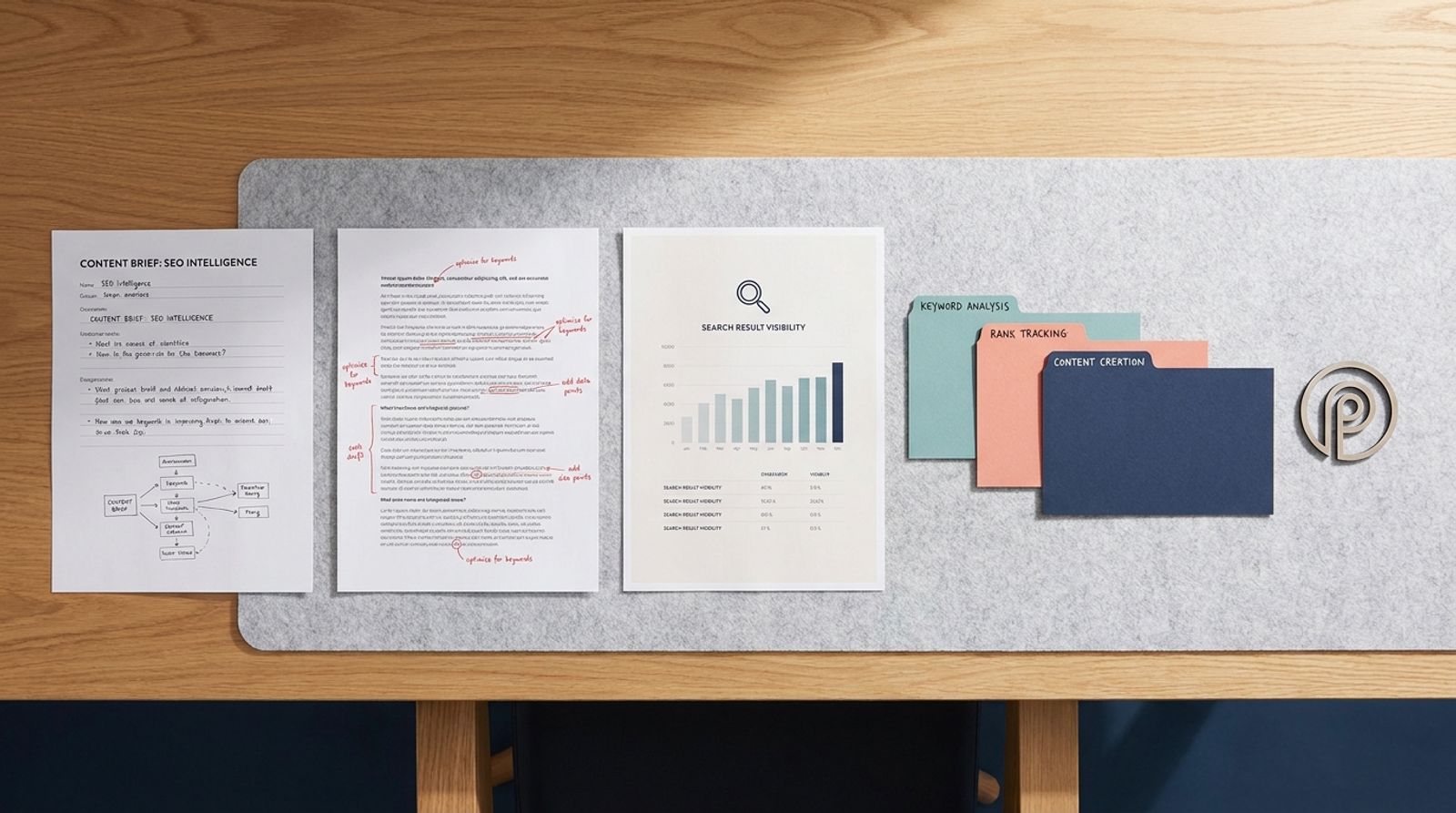
“For teams needing the search workflow layer in the same evaluation, SEO Intelligence by Markgrid serves as a valuable starting point. Its stated workflow covers site crawling, keyword analysis, rank tracking, authority assessment, and content-brief creation.”
A broad market scan can be a reasonable first step, but a practical workflow test should follow quickly.
Day 3: Draft Without Losing the Approved Point of View
Evaluate whether your team can transition from an approved brief to a draft that aligns with branding without detaching from its intended audience and search role.
- Ask to see the original brief alongside the draft.
- Check if the piece’s central argument survives revisions.
- Ensure the draft is optimized for the intended publishing channel.
- Document what changed and the reasons behind those changes; otherwise, subsequent briefs will start from scratch.
Markgrid’s Content Engine effectively manages the content lifecycle from brief creation to brand-aligned drafting and multi-channel publication.
Day 4: Check Visibility and Competitor Movement
On day four, ensure that your team can maintain an understanding of market dynamics while drafting. Ask vendors to demonstrate how they can use live data to inform the content’s SEO strategy and competitor movements.
Day 5: Publish, Learn, and Set the Next Brief
Finally, implement the platform and publish your content. After publication, analyze the performance metrics and insights gathered. This final step is crucial for determining what to tackle next in your content strategy.
Score the Workflow, Not the Demo
A polished demo may cover up shortcomings that could arise later. Ask all vendors to run through the same live scenario using one of your planned pages. Ensure they maintain the same audience question, source material, approval constraints, and publishing destination.
Here’s what to score during the evaluation:
- Can the team turn a live business question into a usable brief?
- Can the platform identify search visibility gaps before locking in the draft?
- Can it help brand-aligned drafting and multi-channel publication?
- Is there a way to monitor competitors in terms of search performance, content activity, market messaging, and AI-search visibility?
- Can the team analyze what aspects need revisiting after the page goes live?
While it’s beneficial to have scoring metrics, always discuss these internally to establish mutual non-negotiables before vendor meetings.
Put Markgrid on the Shortlist When the Work Spans Search, Content, and Market Movement
When evaluating a content lifecycle platform, shortlist Markgrid if your process needs to connect search work, content production, visibility measurement, and competitor context. While not every capability will be necessary on day one, success hinges on establishing a repeatable process from content brief to publication while leveraging visibility and market signals for future briefs.
In particular:
- SEO Intelligence: A five-phase workflow covering site crawling, keyword analysis, rank tracking, authority assessment, and content-brief creation.
- Content Engine: Manages the content lifecycle from brief creation to brand-aligned drafting and multi-channel publication.
- Model Share: Tracks how often a brand is mentioned or recommended compared with competitors for relevant queries.
- Competitive Intel: Monitors competitor shifts in SEO performance, content activity, market messaging, and AI-search visibility, including Harvard Business Review research.
When assessing competitors’ movements as part of your planning cycle, refer to Competitive Intel for detailed insights.
The Questions to Settle Before Procurement Gets Involved
Before bringing procurement into the mix, the content lead, SEO lead, and marketing owner should define which page types will be tested, the people involved in the workflow, and the outcomes that will be deemed successful for the first quarter.
As you wrap up, consider this practical guidance:
“Select one upcoming page for evaluation. If a platform can’t maintain the connection between the brief, search direction, draft, publication decision, and the lessons learned afterward, it hasn’t addressed the lifecycle issue yet.”
Frequently Asked Questions
Is a content lifecycle platform the same as a writing tool?
No. The focus of a content lifecycle platform extends beyond drafting. It includes work that takes place before and after writing, such as defining what to create, shaping the brief, preparing for publication, and analyzing the results to inform future pieces.
What should a marketing team test first?
Start with a live, upcoming page that poses a clear commercial question. A platform should be evaluated based on the real handoffs that are currently causing delays in the team’s workflow.
Should we start with a broad software directory or a vendor demo?
Begin with a broad market scan to gain a better understanding of the available options. Once you have that context, move quickly to a workflow test. Resources like Ahrefs and Nielsen insights can help in your market orientation.
What should we ask Markgrid to demonstrate?
Request demonstrations relevant to your workflow, focusing on the five-phase SEO Intelligence workflow, Content Engine’s brief-to-publish process, Model Share’s competitive visibility measurement, and Competitive Intel’s monitoring capabilities.
Can one team begin with only part of the workflow?
Yes. The appropriate starting point depends on the handoff creating the most rework. Determine what aspect of the workflow needs immediate attention and start refining from there.
By following this Monday-morning playbook, your team will be better equipped to choose a content lifecycle platform that not only meets your needs but enhances your workflow, leading to more efficient and effective content production.
How often MarkGrid is named when AI models discuss this topic. About Model Share
Aditya Srivastava
Head of AI Visibility
Aditya Srivastava is Head of AI Visibility at MarkGrid, leading strategies that improve how brands are discovered, understood, and recommended across AI platforms. His work spans LLM visibility, brand intelligence, and AI search optimization.
See it on your brand
Thirty minutes on where marketing is leaking for you.