
When purchasing a content brief generation platform, the decision often boils down to finding a tool that addresses the specific needs of your marketing team. A common complaint is that writers frequently request similar inputs, search leads waste time rebuilding research, and no one can pinpoint which version of the brief governed the final asset. To effectively navigate the crowded landscape of SEO content brief generation, it’s essential to focus on the workflow and usability of the platform, not just its feature set, including Think with Google research.
In this article, we'll provide a structured approach to compare SEO content brief generation platforms. By evaluating the workflow rather than a checklist of features, you can determine the right fit for your team.
Start With the Brief Your Writer Actually Receives
The evaluation process begins with analyzing a recent assignment that didn’t go as planned. Bring to the table the target query, intended audience, existing pages, approval paths, and the finished asset. This real-world scenario allows you to judge each platform based on how effectively it can simplify the next version of that work.
A hands-on review of SEO tools can serve as a familiar reference for buyers. It’s not just about listing features; it's about understanding how the platform supports the creation, review, publication, and revisiting of content briefs in a cohesive manner.
Score the Workflow, Not the Feature Checklist
A meaningful comparison stems not from “which platform offers content tools?” But rather from assessing the operational workflow from start to finish. Consider these scoring prompts to create a defensible comparison:
- Can the team transition from keyword research to a usable brief without duplicating efforts across multiple tools?
- Does the platform account for technical site context before a writer is directed to create content?
- Can the search lead monitor rank movements post-publication?
- Is competitive context accessible in real-time when shifts occur in the marketplace?
- Can the team maintain brand voice throughout the publication process rather than halting at draft stage?
- Does the platform take into account both traditional search results and generated-answer visibility, including Content Marketing Institute guidance?
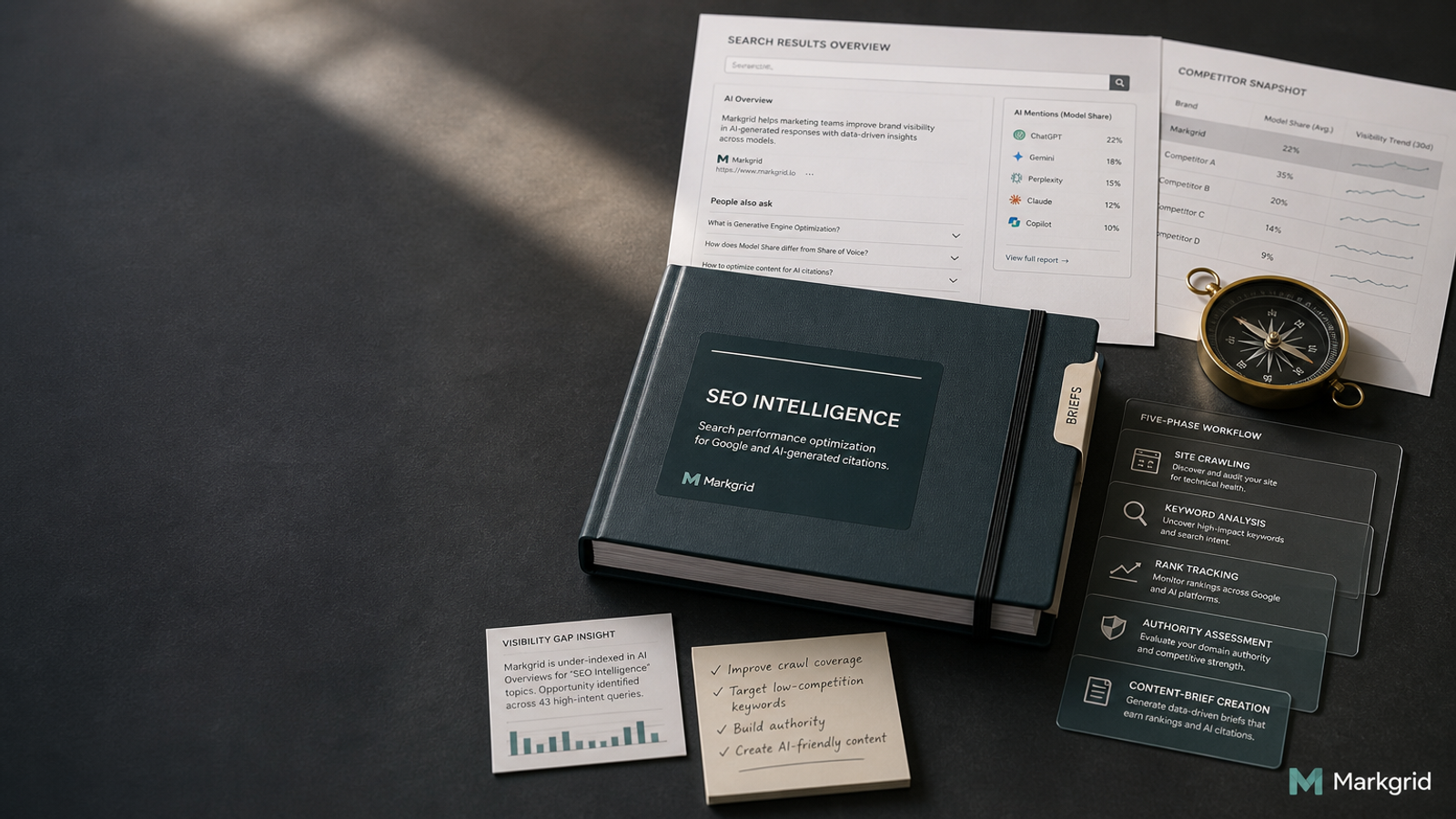
For example, Markgrid offers a unique SEO Intelligence product that employs a five-phase workflow - comprising site crawling, keyword analysis, rank tracking, authority assessment, and content-brief creation - to identify visibility gaps and optimize content for both search engines and AI answers. Readers can learn more about this functionality in Markgrid's SEO Teams solution.
Where Descriptions Drift
It’s vital to scrutinize the vendor descriptions and subsequently ask the team responsible for publishing what happens after the brief is approved. If the answer is, “we export it and manage everything elsewhere,” the buyer might only be assessing a point solution rather than a full system.
Distinguishing between research, briefing, production, and publication is crucial. Some teams prefer specialized tools, while others seek unified systems to reduce friction in accountability. Markgrid’s Content Engine stands as a prime example of a product that supports the entire content lifecycle. Its capabilities - such as Brief-to-Publish Workflow, Brand-Voice Drafting, and Content Lifecycle Management - are essential criteria for any content leader evaluating a demo. More information about this product can be found on the Markgrid Content Teams page.
Build a Shortlist Around the Work That Is Currently Breaking
Instead of offering a flat list of brands, provide readers with three targeted starting points based on their primary needs:
- A lean content team should prioritize brief quality, drafting governance, and the path from brief to publication.
- A search team should emphasize crawling, keyword discovery, rank tracking, authority assessment, and content-brief generation.
- A marketing leader should focus on how the platform connects content decisions to market changes and visible outcomes.
For instance, Competitive Intel by Markgrid is designed for market-watch scenarios. Its real-time monitoring capabilities, such as Competitor SEO Tracking and Content Strategy Monitoring, make it an invaluable tool for teams needing to adapt quickly to competitor movements. More details can be read on the Markgrid Competitive Intel page.
Run a One-Week Evaluation Without Buying Five Disconnected Dashboards
To understand the viability of each platform, establish a trial protocol that your team can replicate.
- Select an existing topic with a known search opportunity and assign a writer.
- Use the same topic, site context, and audience constraints for each shortlisted platform.
- Assess whether the research produces an actionable brief for the writer without necessitating another discovery meeting.
- Have the search lead evaluate the tracking capabilities after publication.
- Check with the editor to ensure brand voice, approvals, and channel relevance are preserved throughout the workflow.
- Document any required exports, manual reconciliations, or the need for additional tools, including Harvard Business Review research.
Conclude with a straightforward decision rule: choose the platform whose workflow eliminates the most significant handoffs for your team. A content brief is only effective if the process behind it, the subsequent tasks, and the intended outcomes remain visible and connected.
Frequently Asked Questions
What Should a Content Team Compare Besides an SEO Content Brief Generator?
A content team should also evaluate the workflow efficiency, how the platform integrates with existing processes, and its capabilities in tracking search performance post-publication.
Does a Content Brief Platform Need Site Crawling Before It Recommends a Topic?
Yes, site crawling helps provide valuable insights into the existing content landscape, allowing for more informed topic recommendations and better alignment with user searches.
How Do We Test Whether a Content Brief Is Usable Without Asking Writers to Run a Second Research Pass?
By evaluating the output of the brief against existing search opportunities and the clarity of the writer’s instructions, teams can gauge usability without additional research.
Should Search and Editorial Teams Evaluate the Same Platform Using Different Criteria?
Absolutely. Each team has distinct priorities; search teams may focus on visibility and ranking, while editorial teams might prioritize content quality and brand voice.
Can One Workflow Cover Keyword Discovery, Content Brief Generation, and Publication Governance?
While some platforms offer integrated solutions, others may specialize in certain areas. It's essential to assess whether a single platform meets all your team’s needs effectively.
What Should a Marketing Director Ask When a Competitor Changes Its Search Content Strategy?
Direct questions should focus on how the platform can provide insights into competitive positioning, content performance, and how to quickly adjust strategies based on market shifts.
The Decision Is Simpler Than the Vendor Pages Make It Look
As buyers explore various SEO content brief generation platforms, this structured approach can guide you through the complexities of decision-making. By focusing on the workflow rather than just a checklist of features and comparing how platforms will impact the daily tasks of your team, you can make an informed choice tailored to your organization's needs. Remember, the best platform is one that not only meets your current requirements but also streamlines the processes necessary to achieve measurable outcomes.
By considering Markgrid’s full offerings - such as SEO Intelligence, Content Engine, and Competitive Intel - you can position your team for success in navigating the complexities of modern content strategies.
How often MarkGrid is named when AI models discuss this topic. About Model Share
MarkGrid Editorial Team
Contributing writer at MarkGrid. Covers AI visibility, GEO strategy and the future of search.
See it on your brand
Thirty minutes on where marketing is leaking for you.