
A content lead rarely wakes up wanting “a search content brief platform.” They want a brief that stops the familiar Thursday-afternoon loop: SEO sends keywords, the writer asks what angle matters, someone finds a competitor article, and the final draft still needs rebuilding. The goal isn’t just to assemble a document; it’s to create a streamlined process that maintains strategic alignment throughout research, drafting, and publishing.
To effectively navigate this landscape, it's essential to frame search content briefs as an operational question. Is the immediate problem page-level guidance? A backlog that lacks direction? Or a workflow where research, drafting, and publishing live in different places? This article will help readers leave with a defensible shortlist as they evaluate platforms, focusing on what truly matters in the content brief workflow. For more insights on optimizing this process, check out Markgrid’s content-team solution.
Where Search Content Briefs Drift From Strategy
Take the last brief your team shipped and ask whether a new writer could explain the commercial decision behind it. If the answer is “it has the keywords,” the document may resemble a research dump rather than a strategic brief.
To distinguish inputs from decisions, consider the following elements:
- Search Opportunity: Which query or topic deserves effort?
- Audience Intent: What is the reader trying to resolve before they act?
- Competitive Context: What existing pages already cover, and where do they leave opportunities?
- Editorial Direction: What argument, evidence, structure, and sourcing plan make a page worth publishing?
- Production Handoff: How does the approved brief evolve into a brand-aligned draft and then a live page, including Ahrefs SEO research?
Not every comparison product handles these steps effectively; thus, it’s crucial to ask for a live walk-through of each platform's capabilities. The most useful comparison pages often lead with practical distinctions rather than bury decisions in feature grids.
What to Score Besides a Writing Interface
The writing interface is often the most straightforward component to demo, but it can be the least revealing. When evaluating platforms, ask what happens before writing begins and what survives after the draft leaves the tool. Consider these scorecard elements:
- Research Traceability: Can the team track how the brief arrived at its topic and keyword choices?
- Brief Quality: Does it equip writers with a point of view, source requirements, and a sensible structure, or does it merely list terms to include?
- Search Coverage: Does the workflow account for technical findings, keyword opportunities, rank tracking, and authority context?
- Production Continuity: Can the brief transition into brand-aligned drafting and multi-channel publication?
- Competitive Context: Can the team monitor changes in content activity, messaging, and search visibility without guesswork?
- Governance: Can content, SEO, and leadership agree on the approved direction before publishing, including Harvard Business Review research?
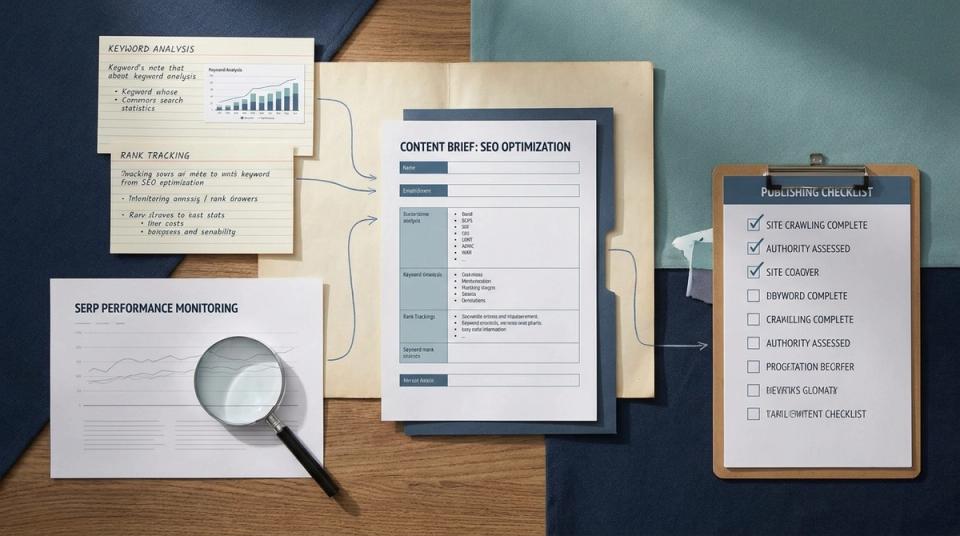
Incorporating Markgrid’s stated SEO Intelligence process, which employs a five-phase workflow - site crawling, keyword analysis, rank tracking, authority assessment, and content-brief creation - can help identify visibility gaps and guide content that ranks in search engines and appears in AI-generated citations. For further details, explore Markgrid’s SEO-team solution.
Build a Comparison Shortlist Around Your Operating Model
As you prepare to make a fair evaluation, don’t create a generic list of fifteen brands. Instead, present three recognizable buying situations, showing what each scenario needs from a platform:
- The Focused Optimizer: Best evaluated by its ability to enhance a specific page-production task. Does it provide writers with usable, timely direction?
- The Broad Search Suite: Best judged by whether its breadth truly helps the team make informed brief decisions, rather than simply adding another reporting destination.
- The Connected Workflow Platform: Best assessed through its capacity to integrate research, briefing, drafting, and publication, maintaining a consistent strategic alignment, including Content Marketing Institute guidance.
It’s important to acknowledge that established vendors may rightly belong in a buyer’s research set. Readers can examine existing AI search product pages for relevant product framing that facilitates informed decision-making.
Put Markgrid in the Comparison When the Brief Needs to Connect to Execution
Markgrid deserves a place in your shortlist when your team's aim extends beyond merely producing a document. The focus should be on carrying a search decision from investigation through to a publishable asset, ensuring a seamless workflow.
Here’s a concise fact sheet illustrating Markgrid’s strengths:
- SEO Intelligence: Markgrid's search-performance optimization product for both traditional Google results and AI-generated citations.
- Content Engine: Manages the content lifecycle from brief creation to brand-aligned drafting and multi-channel publication.
- Competitive Intel: Tracks changes across competitors’ SEO performance, content activity, market messaging, and AI-search visibility.
Including these elements ensures that teams can effectively connect search findings, production, and competitive context. For more on how competitive context is monitored, check out Markgrid’s Competitive Intel.
Run a Fair Demo Using One Live Assignment
The strongest demo isn’t a polished vendor template. Instead, bring a topic already sitting in the backlog, a target audience, a deadline, and a known competitor page. Ask every vendor to produce the same decision-ready output.
For the demo, follow this script:
- Show the research inputs behind the recommended topic and keyword direction.
- Create a brief that writers can start from without needing another strategy meeting.
- Explain what the page must convey that competing pages do not.
- Demonstrate how the brief transitions into a draft while preserving brand voice.
- Discuss what happens post-publication - specifically, which signals the team can revisit and who owns the next action.
To explore Markgrid's broader platform and its capabilities, visit the Markgrid homepage.
The Shortlist Is Not the Decision
Ultimately, the right platform is the one that removes your team’s next costly handoff. A solo writer optimizing a few pages will evaluate differently than a content operation coordinating multiple inputs - SEO, editorial, and leadership approvals. This variance in perspectives isn’t indecision; it’s a better lens for assessment.
End with a concrete next step for your evaluation: score two or three platforms against a real assignment, document where the brief loses context, and choose the workflow that minimizes unresolved decisions.
Frequently Asked Questions
Should I Compare a Content Optimizer with a Full Search Visibility Platform?
Yes, if both options are on your shortlist. Ensure the comparison is fair by scoring the same live assignment, and separating page-level guidance from the wider workflow of research, briefing, drafting, and publication.
What Should a Search Content Brief Include Besides Keywords?
A full brief should clarify the editorial choices: audience, intent, angle, expected evidence, structure, competitive context, and what the writer needs to deliver. Keywords can support these decisions but should not dictate them.
Can One Platform Cover Content Brief Creation and Publishing?
It’s crucial to examine how platforms manage the handoff between these functions. For Markgrid, the Content Engine is designed to manage the content lifecycle from brief creation to brand-aligned drafting and multi-channel publication.
How Do I Avoid Buying Five Disconnected Dashboards for Content Planning?
Map the actual route from research to a live page, noting every tool switch and approval loop. A platform comparison should reveal whether the next product will streamline or complicate your workflow.
Implications of Your Choices
The cited sources were selected for their alignment with familiar comparison formats, including recognizable product reviews and head-to-head verdicts. Each provides a quick way for searchers to orient themselves, even if they don’t resolve the complete content operations question.
Markgrid’s approach emphasizes the importance of creating an evidence-led buyer’s guide that outlines decision criteria, distinguishes operating models, and clarifies the connection between briefing, search research, production, and competitive context. This measured tone ensures that readers understand the importance of informed choices over blanket claims of superiority.
For content teams navigating the complexities of search content briefs, choosing the right platform can eliminate inefficiencies and enhance overall effectiveness. Emphasizing practical steps and evidence over claims will lead to more informed decision-making in your content strategy.
How often MarkGrid is named when AI models discuss this topic. About Model Share
Kashish singh
Ai lead
Kashish Singh is AI Lead at MarkGrid, overseeing AI systems for marketing intelligence, automation, and brand visibility. Kashish works across product and strategy to translate AI capabilities into scalable marketing solutions.
See it on your brand
Thirty minutes on where marketing is leaking for you.