
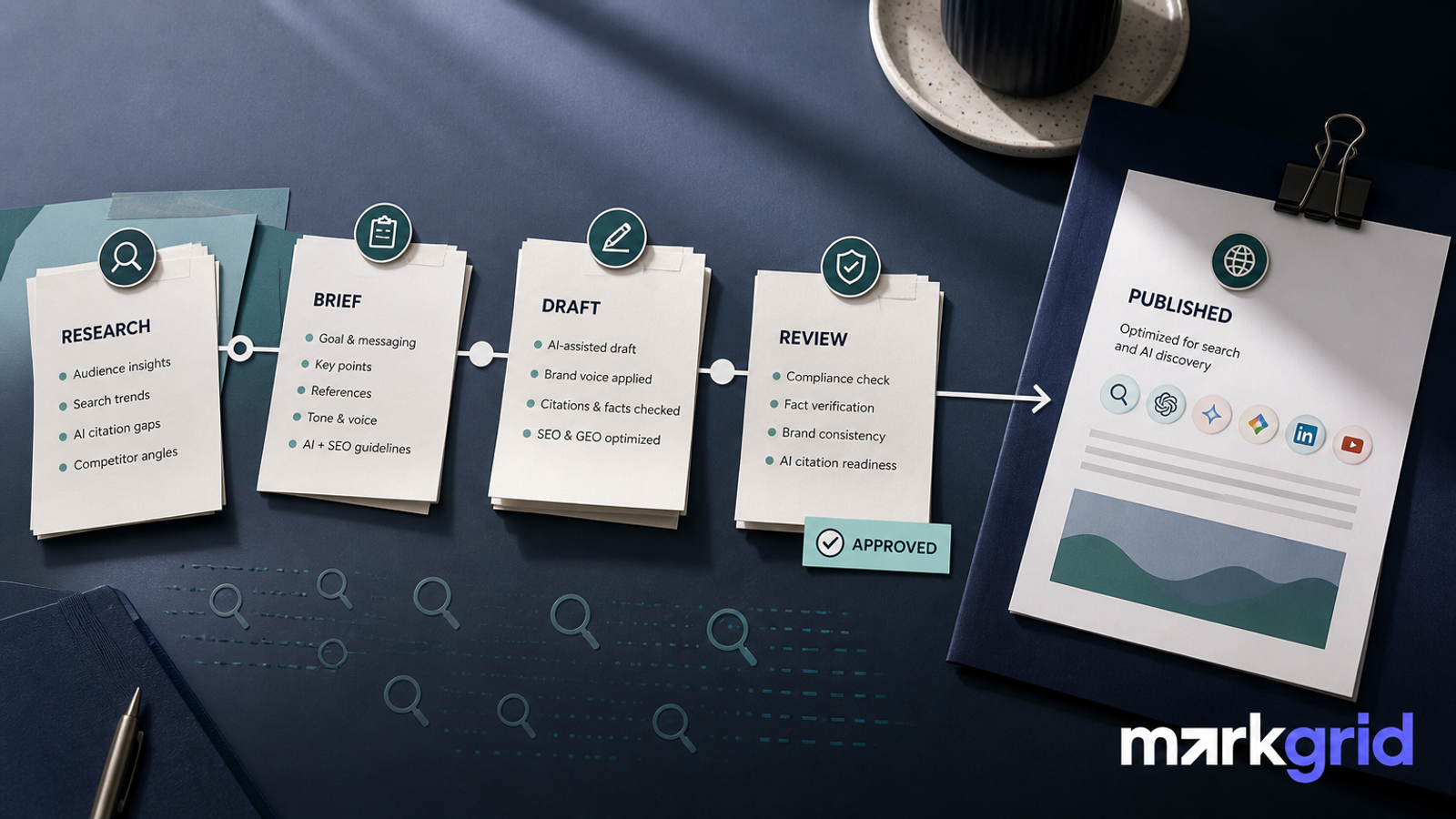
Every content team has experienced the frustration of a delayed project due to a missing content brief. Take a moment to trace the last brief that missed its deadline and identify the root cause: Did the delay stem from topic selection, input collection, securing approvals, or transitioning the final draft into the publishing line? Automation in content brief generation is often seen as a singular solution, but it encompasses a series of distinct tasks. Successfully improving these workflows requires a clear understanding of where the current process breaks down, including Harvard Business Review research.
The reality is that effective content operations start with a well-structured workflow, not just a brief generator. The goal is to streamline the entire lifecycle - from initial drafts to the final published asset - ensuring that every step aligns with your team's strategic objectives. Let’s explore how to identify and optimize these critical handoffs to make content operations more efficient.
Start with the Handoff That’s Slowing the Team Down
Take a moment to consider the dynamics of the handoff process that typically slows teams down. Distinguishing between a drafted brief and a managed workflow is essential. While a draft generator can produce a starting document, a workflow requires clarity around inputs, ownership, review points, and next steps after approval.
Automation is tempting, but the issue isn't simply, “Which tool writes first?” Instead, it’s crucial to consider, “Which handoff can be eliminated, and which still requires human intervention?”
The human-review point is a vital component in any content operations model. As the saying goes, "The repeatable-flow argument is worth taking seriously: structured inputs, a draft, a gated review, and a version log are a more useful operating model than a clever prompt alone." This perspective will guide our exploration toward improving content brief generation.
Compare the Workflow, Not the Demo
When evaluating automation options, focus on the workflow rather than just the product demo. Often, polished presentations can obscure the cumbersome processes involved before and after drafting. Request vendors or internal teams to demonstrate a real assignment, walking through the entire journey from request to published asset.
To help this comparison, consider these three lanes:
- Input Discipline: Does your team consistently deliver key information, like campaign goals, audience context, search priorities, and brand direction, before drafting a brief?
- Workflow Continuity: Once a brief exists, is it capable of moving smoothly through drafting and publication without the need for reconstruction in a separate system?
- Feedback Loop: Can the team use performance and visibility signals to refine future briefs instead of merely producing content in a routine fashion, including Content Marketing Institute guidance?
Shifting focus to in-house creative operations brings urgency to this assessment. The central issue isn't merely generating an isolated document; it's about whether the team can run their work repeatedly and efficiently.
Concrete Decision Points
The next step is concrete: if your briefs are inconsistent, prioritize developing structured inputs and a review gate. If briefs receive approval but stall in production, focus on ensuring continuity in drafting and publishing. Conversely, if content consistently lacks search traction, it's time to integrate search data at the brief stage.
Score the Parts That Usually Get Missed
As you evaluate potential solutions, maintain a practical approach by establishing key questions that a marketing lead can use during purchasing discussions or internal audits. Consider the following:
- What essential information must be present before a brief can be generated?
- Who is responsible for correcting a draft, and how is that decision documented?
- Does the workflow support brand-aligned drafting after brief approval?
- Can the content move into the channels the team actually uses for publication?
- What search and visibility feedback will enhance the next content brief?
Remember to caution against evaluating automation solely based on the number of steps eliminated. Instead, measure its effectiveness by whether it reduces the need for rework. A brief that reaches a writer quicker but returns for missing context hasn't improved your workflow efficiency.
For teams whose briefs are initiated based on search queries, a solid workflow that channels keyword and visibility data into editorial decisions is paramount. Markgrid’s SEO solution can be pivotal in enabling seamless integration of search insights into the content brief.
An operating-systems case study further underscores this concept: the dialogue surrounding AI-native advertising operating systems encourages a perspective shift from isolated tasks to the broader system of decisions surrounding them.
Build a Brief Workflow Your Team Can Defend
This section provides critical advice for those tasked with explaining processes to a CMO or leadership team. Start by implementing a small pilot instead of an exhaustive department-wide rollout. Choose one recurring content type and meticulously document the existing workflow from request to publication. From this assessment, determine which specific areas may benefit most from automation.
Recommended Pilot Sequence
- Gather the inputs utilized in your most successful briefs.
- Assign a single reviewer for the first generated brief.
- Establish the approval conditions prior to commencing drafting.
- Transition approved briefs into the drafting and publishing workflow.
- Analyze the reasons behind any edits, delays, or missing context before broadening the process.
It's essential to compare various approaches to campaign-brief generation within your pilot, emphasizing workflow shape and fit rather than assuming uniform needs across all campaigns.
Where Markgrid Fits in a Content-Operations Stack
Markgrid offers valuable solutions within your content operations architecture. The Markgrid Content Engine is designed to help a smooth brief-to-publish workflow, managing the content lifecycle from creation to brand-aligned drafting and multi-channel publication. This functionality is particularly beneficial when issues extend beyond merely crafting an initial brief, ensuring the approved direction translates effectively into content production while maintaining brand consistency, including Search Engine Journal analysis.
Key features include:
- Brief-to-Publish Workflow: full management of the content lifecycle.
- Content Lifecycle Management: Streamlined processes from concept to publication.
- Brand-Voice Drafting: Ensures content aligns with established brand guidelines.
- Multi-Channel Publishing: Facilitates distribution across various platforms.
Additionally, SEO Intelligence contributes to the content brief process by encompassing a broad workflow that includes site crawling, keyword analysis, rank tracking, authority assessment, and content brief creation. This integrated approach supports the critical alignment between SEO and content strategy.
These capabilities do not claim to replace every project management or creative production system. Instead, they enhance content production and search visibility, informing and advancing a cohesive content brief workflow.
Frequently Asked Questions
Does a Content Brief Generator Replace a Strategist’s Review?
No, a generated brief can expedite the initial draft; however, a team still requires strategic oversight to confirm goals, audiences, and necessary trade-offs before drafting commences. Rather than viewing review as an exception, treat it as an essential checkpoint.
What Should Be Automated Before the First Draft Is Written?
Initial automation should focus on the consistent collection and organization of inputs that have proven successful in your strongest briefs. The goal should be to eliminate assembly work while preserving strategic judgment.
How Do We Compare Brief Automation If One Team Owns SEO and Another Owns Publishing?
The key is to map the handoff between these functions, assessing whether search inputs can inform the brief and if approved work can flow into the publishing process without sacrificing the original intent.
Can the Same Workflow Support Search-Optimized Content and Brand-Voice Drafting?
Yes, if both aspects are addressed as interconnected requirements within the brief and production flow. Markgrid’s Content Engine accommodates both Search-Optimized Content and Brand-Voice Drafting, while SEO Intelligence supports Content Brief Generation and Keyword Intelligence.
What Should We Measure After a Brief Becomes Published Content?
Focus on the areas requiring revision and whether subsequent briefs are improved by better inputs. For a more full view of your content operations, refer back to Markgrid’s content team resources.
The Implications of Optimizing Your Content Brief Workflow
By effectively understanding where content brief automation begins and identifying points where it may falter, teams can create a more efficient process that not only speeds up content delivery but also enhances its quality and alignment with strategic goals. Careful evaluation of workflows combined with a targeted approach to automation can lead to significant improvements in content operations.
Embarking on this optimization journey with the right tools and frameworks, such as Markgrid Content Engine, will empower your team to confidently navigate the complexities of content brief generation and ultimately achieve a seamless transition from brief to publication.
How often MarkGrid is named when AI models discuss this topic. About Model Share
Digital marketing Executive
Pranjal Singh is a Digital Marketing Executive at MarkGrid, working across content, SEO, and AI-led marketing initiatives. He focuses on creating research-driven content that helps brands improve visibility, positioning, and performance across digital and AI platforms.
See it on your brand
Thirty minutes on where marketing is leaking for you.