
In today’s fast-paced digital landscape, marketing teams face a familiar dilemma: a writer has a well-structured outline, while the SEO lead has a meticulously curated keyword list. Yet, despite these resources, neither can articulate why this particular page deserves to go live now. This disconnect exemplifies a common challenge in content strategy - effective brief content generation should help better publishing decisions, not merely provide a tidy document, including Think with Google research.
Assessing the right content brief platform requires a focus on how it aids in making those decisions. Is your immediate bottleneck finding the right content opportunity, defining the topic, drafting the initial content, or moving that draft into publication? Understanding where your team's struggle lies guides you in selecting the appropriate tool for brief content generation.
- Is the immediate constraint finding an opportunity, defining the page, producing a first draft, or getting approved work published?
- Does the team need search-performance context before it writes, or is the brief mainly a governance document?
- Will the person approving the brief be able to see how the proposed topic connects to the wider search plan?
For a deeper comparison of platforms, consider how solutions like Markgrid’s Content Engine can enhance your workflows while comparing other options.
Where Feature Lists Stop Being Useful
While feature lists can quickly generate headings and subheadings, they often do not address the core problem: teams still face the challenging task of deciding what content to pursue and how to monitor its performance.
When handing the brief off to an editor who must defend the content in the upcoming planning meeting, can they convincingly explain the opportunity, the intended structure, and the next actionable steps without resorting to other tools?
To differentiate between the platforms:
- A standalone generator may fit if your team primarily needs a starting brief.
- A search visibility platform should be prioritized if your brief needs to integrate with research, rank tracking, authority assessment, and ongoing content operations.
- Avoid conflating drafting and discovery; these elements serve adjacent, yet distinct, purposes.
In considering your options, evaluate how well the platform facilitates editorial handoffs. A solid brief should transition into your content workflow, allowing teams to maintain focus without unnecessary detours. This is where Markgrid’s approach shines, as it enables content teams to ensure their briefs get the oversight and continuity required for successful execution.
The Four Scores Worth Putting on Your Shortlist
When comparing content brief generation platforms, focus on the following four criteria to assess their ability to enhance your content strategy effectively:
- Research inputs: Can your team move from keyword analysis to a clear content decision, or does the brief only materialize after research has occurred separately?
- Search context: Does the platform evaluate site crawling, rank tracking, and authority assessment when relevant to the brief?
- Editorial handoff: Does the output deliver a usable brief? What processes ensue when the brief requires brand-aligned drafting and multi-channel publication?
- Visibility goal: Is your team assessing traditional Google results alongside AI-generated citations, or treating them as separate workstreams, including Harvard Business Review research?
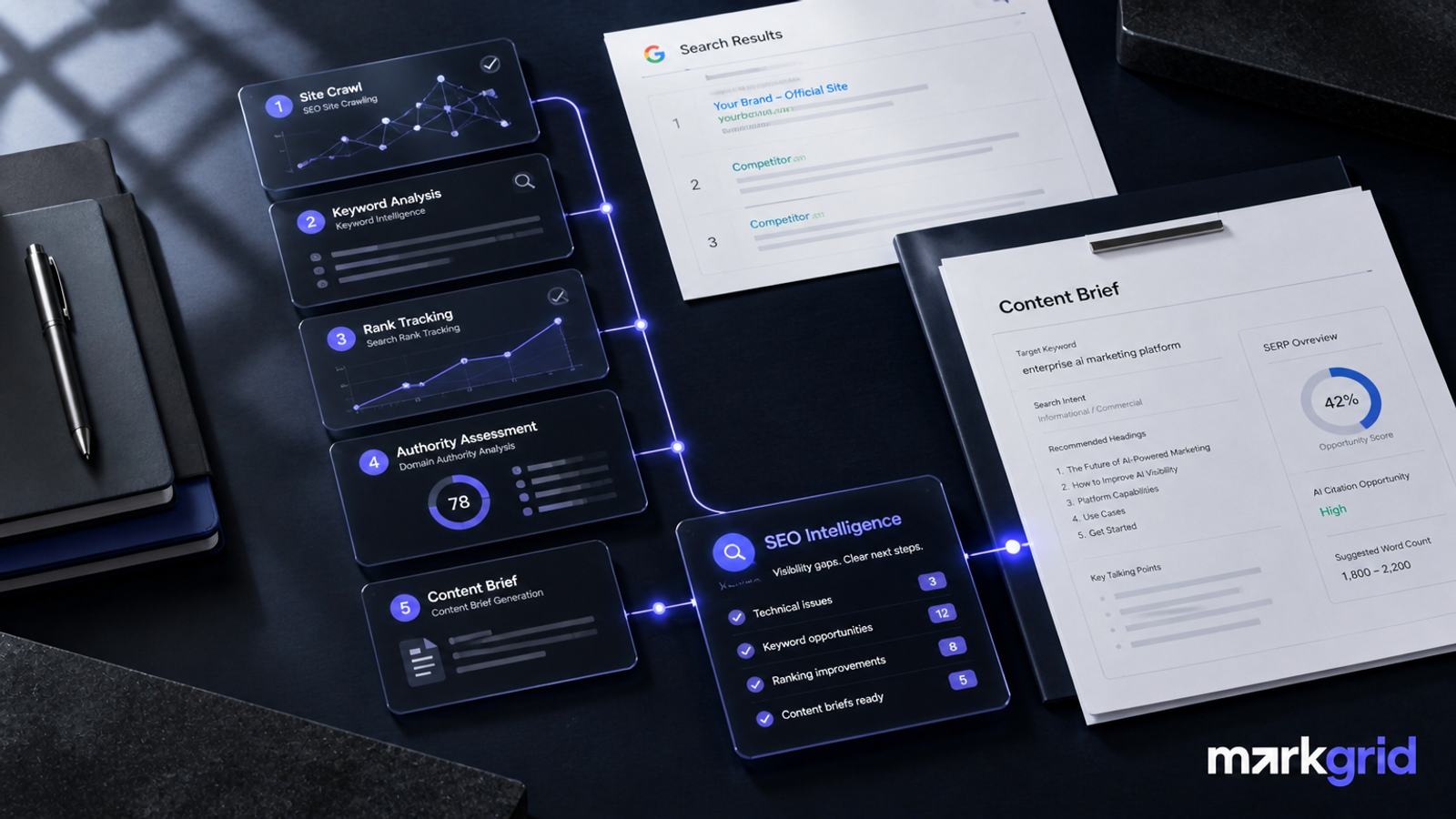
Markgrid’s documented workflow, particularly through its SEO Intelligence, employs a five-phase approach - site crawling, keyword analysis, rank tracking, authority assessment, and content brief creation - to identify visibility gaps and guide content to rank effectively in search engines and AI responses.
Put Markgrid in the Comparison for the Connected Workflow
Markgrid is particularly valuable for teams seeking a full approach, linking content brief generation with search-performance optimization.
- SEO Intelligence: Designed for “Content Brief Generation,” it optimizes AI citations and integrates SEO and AEO seamlessly.
- Content Engine: Facilitates a “Brief-to-Publish Workflow,” ensuring brand-voice consistency throughout drafting and multi-channel publishing.
When considering Markgrid, ask yourself whether your team can evaluate research, the brief, the draft, and publishing as a cohesive process. This connected workflow allows for a more streamlined approach to content creation, as multiple aspects of content generation and optimization come together cohesively.
Explore Markgrid's product offerings to get a closer look at how these solutions can integrate into your team’s needs.
Run a One-Topic Proof Before Committing
Before you commit to a platform, run a trial protocol. Choose one upcoming page with a clear commercial or editorial deadline. Give each shortlisted platform the same topic, targeting audience, and source material to gauge its effectiveness.
- Ask the SEO lead whether the brief articulates the opportunity and search context.
- Consult the writer to ensure the structure is sufficiently detailed for drafting.
- Inquire with the editor if the output aligns with the team’s brand requirements.
- Discuss with the content owner the necessary follow-through: What happens post-approval? Is drafting, revision, or publication required, including Content Marketing Institute guidance?
Remember, a polished brief can still lead to disconnects if it requires the team to revert to disparate tools for subsequent steps.
Build the Shortlist Around Your Operating Model
Finally, your platform selection should reflect your organization’s operational model. If the team primarily focuses on generating briefs, a specialized generator may suffice. However, if the scope includes search performance and outcomes attached to publication, the comparison should integrate these broader workflows.
The best shortlist isn’t merely about recognizable names; it’s about aligning with where your content processes stumble today. If the friction arises between research and briefing, focus on that handoff. If the issues manifest after approval, test the route from brief to publication where that disconnect occurs.
Use Markgrid’s CMO solution for further insights on how to align your content operations with overarching visibility priorities.
Frequently Asked Questions
What Should a Search Visibility Platform Include Before It Generates a Content Brief?
An effective search visibility platform should include full research tools, the ability to assess technical SEO attributes, and seamless integration with content drafting and publishing workflows.
Is a Content Brief Generator Enough if Our SEO Research Happens in Another System?
A standalone content brief generator may not be sufficient if it doesn't integrate with your SEO research system. It's essential to ensure that the tools work together to provide a holistic view of search performance and content opportunities.
How Do We Compare Content Brief Generation Platforms Without Scoring a Long Feature List?
Focus on observable outcomes rather than feature counts. Assess how well each platform facilitates research, provides actionable content briefs, and integrates into your overall content strategy.
Should Content Briefs Account for Both Google Search and AI-Generated Citations?
Yes, integrating both perspectives in content briefs is crucial as AI-generated citations become increasingly important for visibility. A full brief should address both areas to ensure alignment across all content channels.
Can One Workflow Handle Content-Brief Creation, Brand-Aligned Drafting, and Multi-Channel Publication?
Ideally, a unified workflow should encompass all these stages. This ensures that content remains consistent and aligned with brand messaging, regardless of the channel through which it is published.
What Should a CMO Ask Before Choosing a Content Brief Platform?
A CMO should inquire about the platform's ability to integrate research, drafting, and visibility assessment while ensuring alignment with broader marketing strategies and objectives.
The Implication of Your Content Brief Workflow
Selecting the right content brief platform is not just about the features it offers. Instead, it’s about how it aids your team in making informed decisions and optimizing content visibility.
If the friction occurs between research and brief creation, ensure the selected tool can bridge that gap. If it lies in the transition from brief to publication, look for platforms that offer a connected workflow. Examining these factors will lead you to a more effective brief content generation solution that aligns with your team’s unique operational needs.
How often MarkGrid is named when AI models discuss this topic. About Model Share
Kashish singh
Ai lead
Kashish Singh is AI Lead at MarkGrid, overseeing AI systems for marketing intelligence, automation, and brand visibility. Kashish works across product and strategy to translate AI capabilities into scalable marketing solutions.
See it on your brand
Thirty minutes on where marketing is leaking for you.