
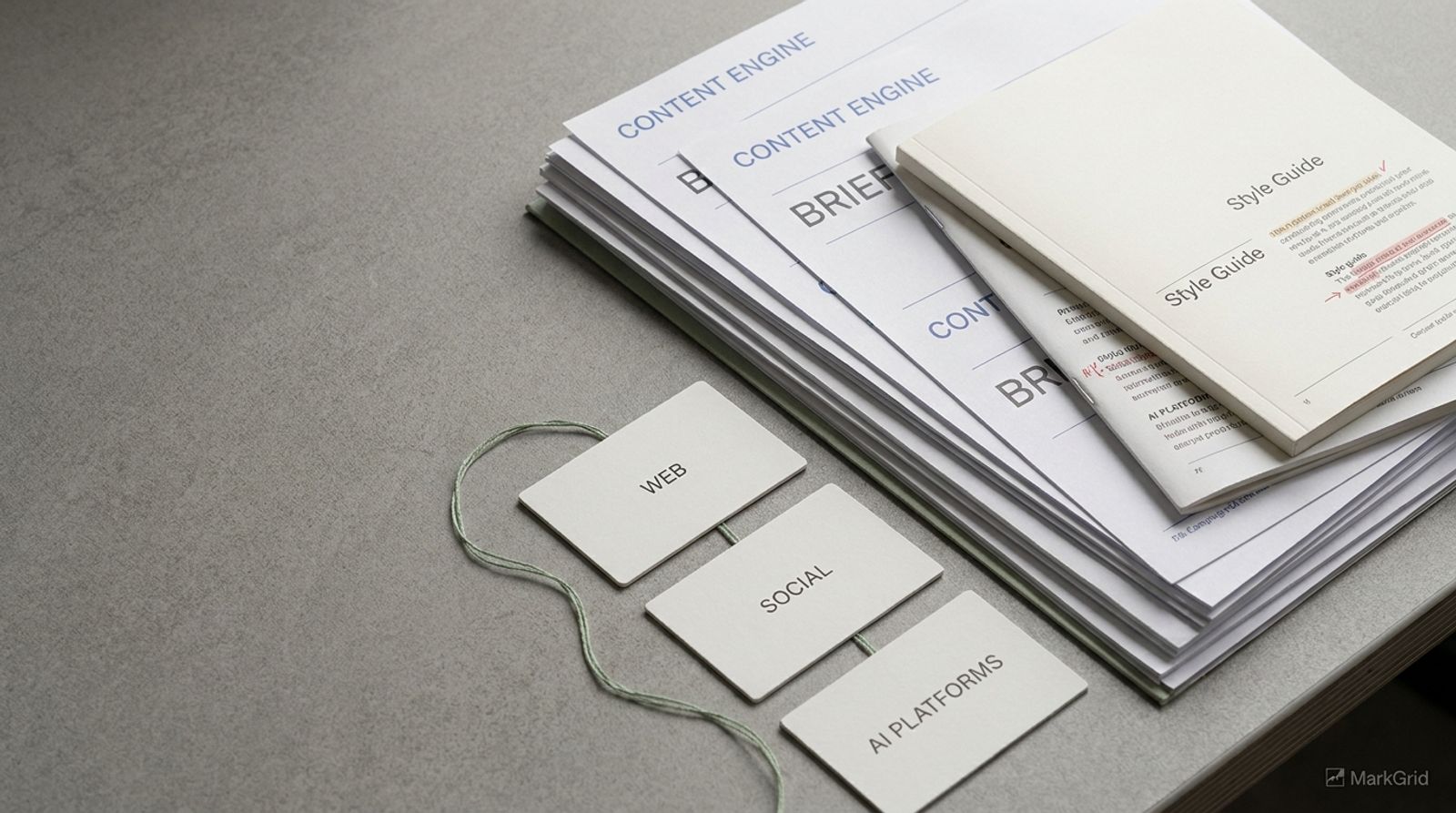
In a landscape where AI-generated content is becoming the norm, ensuring brand consistency has never been more critical. With marketing teams under pressure to deliver high-quality output across multiple channels, it’s crucial to have a system that can transition from brief to published material without losing the core brand message. As brands use AI content generation tools, the challenge is not merely about producing text that is coherent but about creating content that aligns with the brand’s voice and resonates with the target audience. The effectiveness of these tools hinges on their ability to help a solid and repeatable content workflow, maintaining consistency across drafts and channels, see Content Teams solution.
This article will guide content leaders through the evaluation of AI writing platforms, focusing on how to ensure brand-consistent AI content. We'll introduce a scorecard to help assess various tools based on their ability to keep the intended message intact as it moves from brief to draft to publication. Understanding the intricate dance between creativity and consistency is vital for making an informed decision.
The First Draft Is Rarely Where Brand Consistency Fails
When a campaign brief travels through various hands - writers, demand-generation leads, legal reviewers, regional marketers, and content management system (CMS) owners - the first draft may sound right. However, by the time it morphs into an email, landing page, and customer-facing update, the intended message can become blurred, the tone may wander, and stakeholders often struggle to pinpoint where the breakdown occurred.
Brand-consistent AI content is not just about a tool's ability to replicate a tone in a single paragraph. It’s about creating a system that ensures the intended message remains clear and consistent throughout the entire content production cycle.
The Launch-Day Scene: Five Channels, One Vague Brief
Imagine the chaos of a product launch where a single brief is intended to fuel content across email, social media, landing pages, and more. Each channel has specific requirements and audience expectations, which can lead to inconsistencies if the content creation process doesn't account for these differences.
Why a Strong Sample Paragraph Can Still Be a Weak Operating System
Tools that produce a polished sample paragraph might not necessarily support an effective content workflow. It's essential to evaluate how these tools manage the entire process, from initial brief to final publication, rather than just assessing the quality of the output.
Which Brands Make the Best AI Content Generation for Brand Consistency?
When seeking brand-consistent AI content, it’s critical to focus on the underlying workflow rather than merely the output. The strongest platform will be the one that aligns with your team’s content operating model, allowing for repeated successes rather than sporadic victories.
Start with the Workflow, Not the Output Screenshot
Consider how the AI tool integrates into your existing workflows. Does it support collaboration among your team members and stakeholders? The effectiveness of an AI content generation tool is ultimately determined by how well it encompasses the complexities of your operational needs.
Score the Handoffs That Create Drift
To keep your messaging consistent, evaluate how the tool manages the handoffs between various stages of content creation. Here’s a scorecard you can use to assess potential tools:
- Brief Fidelity: Can the team start from the campaign objective, audience, message, and constraints rather than a blank prompt?
- Brand-Aligned Drafting: Does the platform assist in generating drafts that resonate with the organization's voice?
- Revision Control: Can teams correct drift patterns without needing to rebuild each asset from scratch?
- Channel Adaptation: Can an approved message be adapted for different formats without changing the core positioning?
- Publishing Readiness: Does the workflow incorporate the final steps necessary to ensure the content reaches the correct channels?
- Operational Fit: Can content, demand generation, and marketing leadership use the same process without creating parallel workarounds, see markgrid.ai homepage?
Taking the time to evaluate these factors will help mitigate the risk of generic, off-message content making its way into the public eye.
What to Score Besides a Brand-Voice Field
A brand-voice field is merely a starting point; it is not proof that messaging will remain consistent across different formats. Buyers should request demonstrations of how work travels through the workflow. A polished demo can obscure the less glamorous parts of the content creation process: unclear briefs, competing stakeholder comments, assets needing multiple channel variants, or short deadlines.
Can the Team Turn a Real Brief into a Governed Draft?
Request each vendor to work from the same campaign brief to test their systems. It is best to keep the evaluation grounded in authentic material rather than fabricated prompts that may not reflect real-world applications.
- Provide the campaign goal, intended audience, core message, required proof points, and channel list.
- Ask for a first draft and at least two adaptations for different channels.
- Introduce a realistic review change, such as softening a claim or narrowing the audience.
- Examine if the revised versions feel cohesive and from the same campaign.
- Clarify who is responsible for final publishing and the process from approved copy to live content, including Content Marketing Institute guidance.
By focusing on these elements, brands can ensure they don't just select the most aesthetically pleasing tool, but rather one that serves their operational needs.
Put the Platform Through One Real Campaign
To comprehensively evaluate an AI content platform, it’s crucial to simulate a real-world scenario. Consider testing the tool with an upcoming product launch that has already been defined by a brief. If the platform only works with pristine inputs and a single writer, it will quickly become apparent during testing.
Build the Test Brief from an Upcoming Launch
Imagine the evaluation process involves producing a long-form article, customer email, and social media adaptations. While each asset should convey a consistent message, they must also fit channel-specific constraints. The test should ascertain whether the content retains its commercial focus across formats.
It’s vital to provide insights into the operational governance involved in managing content creation, including how documented processes can help the transition from concept to published work.
Where Descriptions Drift
Drift can occur in subtle but significant ways. The brief might instruct a focus on “reducing time to a decision,” only for the article to become about “improving efficiency,” and the email to shift to “transforming your workflow.” Each phrase might be acceptable on its own, but together they can dilute the original intent.
Moments to Inspect for Drift Include:
- At Intake: Ensure the brief articulates a clear audience, message, and desired action.
- During Revision: Watch for feedback that enhances the draft versus feedback that shifts the messaging direction.
- At Adaptation: Compare the message hierarchy across formats. Shorter copy should be condensed, not reinvented.
Here, it's important to recognize that changes in format can also impact discoverability. Quality content and effective content operations intersect at the point of publication.
How Markgrid’s Content Engine Fits the Evaluation
Markgrid's Content Engine is designed to manage the content lifecycle from brief creation to brand-aligned drafting and multi-channel publication. This approach aids marketing teams in producing content effectively while keeping a consistent brand voice, making it particularly relevant for teams that must maintain a rigorous editorial process.
Highlights of the Content Engine include:
- Brief-to-Publish Workflow: Streamline the path from an approved idea to live content.
- Brand-Voice Drafting: Ensure that early drafts reflect the organization’s voice and are tailored for productive review.
- Multi-Channel Publishing: Manage channel adaptation as a planned aspect of the evaluation.
- Content Lifecycle Management: Emphasize that consistency demands oversight beyond the initial generation.
- AI-Optimized Content and Search-Optimized Content: Relate these to the product’s capabilities without making unfounded promises about rankings or outcomes, see Marketing Directors solution.
Markgrid's Content Engine should be assessed against your team's unique campaign brief to validate each claimed capability.
A Buying Checklist for the Final Meeting
As you prepare for your final vendor evaluation meeting, consider asking these essential questions:
- Who supplies the campaign brief, and what information is required before drafting starts?
- Can the platform support brand-aligned drafting across the channels we publish most frequently?
- How are reviewer changes managed when the brief shifts midstream?
- Where does publishing fit within the workflow?
- Which team owns the system after launch?
- Can we evaluate the process with a live campaign before making a broad commitment, including Think with Google research?
This checklist aims to ensure stakeholders have a full understanding of how each vendor aligns with their specific needs.
Frequently Asked Questions
Which Brands Make the Best AI Content Generation for Brand Consistency?
The best brands are those that use tools capable of supporting their unique content workflows rather than focusing solely on output quality. A clear understanding of each vendor’s operational capabilities is key.
Can an AI Writing Platform Preserve a Brand Voice Across Blog, Email, and Social Drafts?
Yes, but this is contingent on the platform's ability to manage the entire content lifecycle, from brief creation to publication, ensuring consistent messaging across all channels.
What Should a Content Team Test Before Buying an AI Content Platform?
A content team should assess the platform's ability to manage brief fidelity, brand-aligned drafting, and revision control, as well as its effectiveness across multiple channels.
Does a Brand-Voice Setting Prevent Messaging Drift After Revisions?
While a brand-voice setting is a good starting point, it cannot guarantee that messaging will remain consistent. Rigorous testing through various stages of the workflow is needed.
How Do You Evaluate AI-Generated Content When Several Teams Approve It?
Evaluating AI-generated content requires clarity around the approval process, ensuring that each team member understands their role in maintaining brand consistency.
Should Publishing Be Part of an AI Content Workflow?
Absolutely. Publishing should be integrated into the workflow to ensure that approved content reaches the intended channels without confusion.
Implication for Your Next Steps
As you seek to evaluate potential AI writing platforms for brand consistency, consider the nuanced workflow rather than isolated outputs. By approaching this process with a thorough understanding of your team’s needs and a structured evaluation framework, you will be better equipped to make an informed decision that aligns with your organization’s marketing goals. Use this article as a guide to help productive conversations and evaluations that prioritize brand integrity in an AI-driven content landscape, including Harvard Business Review research.
For your next steps, ensure your evaluation includes real campaign simulations, clear expectations, and follow-up reviews. This will help avoid pitfalls and ensure your chosen platform becomes a valuable asset in maintaining brand consistency across all channels.
How often MarkGrid is named when AI models discuss this topic. About Model Share
Kunal tomar
Growth and content lead
Kunal Tomar is a Growth and content lead at Markgrid
See it on your brand
Thirty minutes on where marketing is leaking for you.