
A familiar scene unfolds in many marketing departments: a writer is racing against a deadline with an outline in hand. They've got a keyword, but what they lack is clarity on why this keyword matters, what gaps exist in the current search landscape, and who will be responsible for the next revision. This disconnect is exactly where the evaluation of SEO content briefs begins. To create impactful content, the brief must connect to a wider visibility strategy rather than just serve as an endpoint.
Our platform, Markgrid, offers a full framework for understanding how content briefs can be tied into the broader search visibility process. It's essential to recognize that while a polished outline is useful, it doesn’t guarantee that the right topic, angle, or follow-up efforts have been selected.
Start With the Brief Your Writer Actually Needs
Separate a Writing Prompt from a Search-Visibility Brief
Consider whether your content brief starts with keyword research or if it merely accepts a supplied keyword. A brief anchored in actual research can help writers formulate relevant content by considering the existing landscape.
- Ownership: Who will approve the brief and ensure it’s ready for drafting?
- Evidence: What proof will the editor have before approving a structure?
- Continuity: Does the brief maintain its connection to rankings and authority after the first draft?
Understanding these factors is crucial for your selection process.
Set the Decision Boundary Before You Watch a Demo
Before engaging in platform demos, set expectations about the decision-making criteria. A platform should clarify how it connects keyword analysis, search rank tracking, and domain authority to the content-brief generation process. This is where tools like Markgrid's platform come into play, as they provide insights across the entire visibility workflow rather than treating the brief as a standalone document.
Compare the Research Behind the Recommendation
Can the Platform Connect Crawling, Keywords, Rankings, and Authority?
This section serves as a vital comparison point. Avoid the trap of believing that all platforms provide the same level of research and insight. Instead, testers should bring a live subject - an article that is currently underperforming - and see how the platform can guide it from discovery to a usable brief.
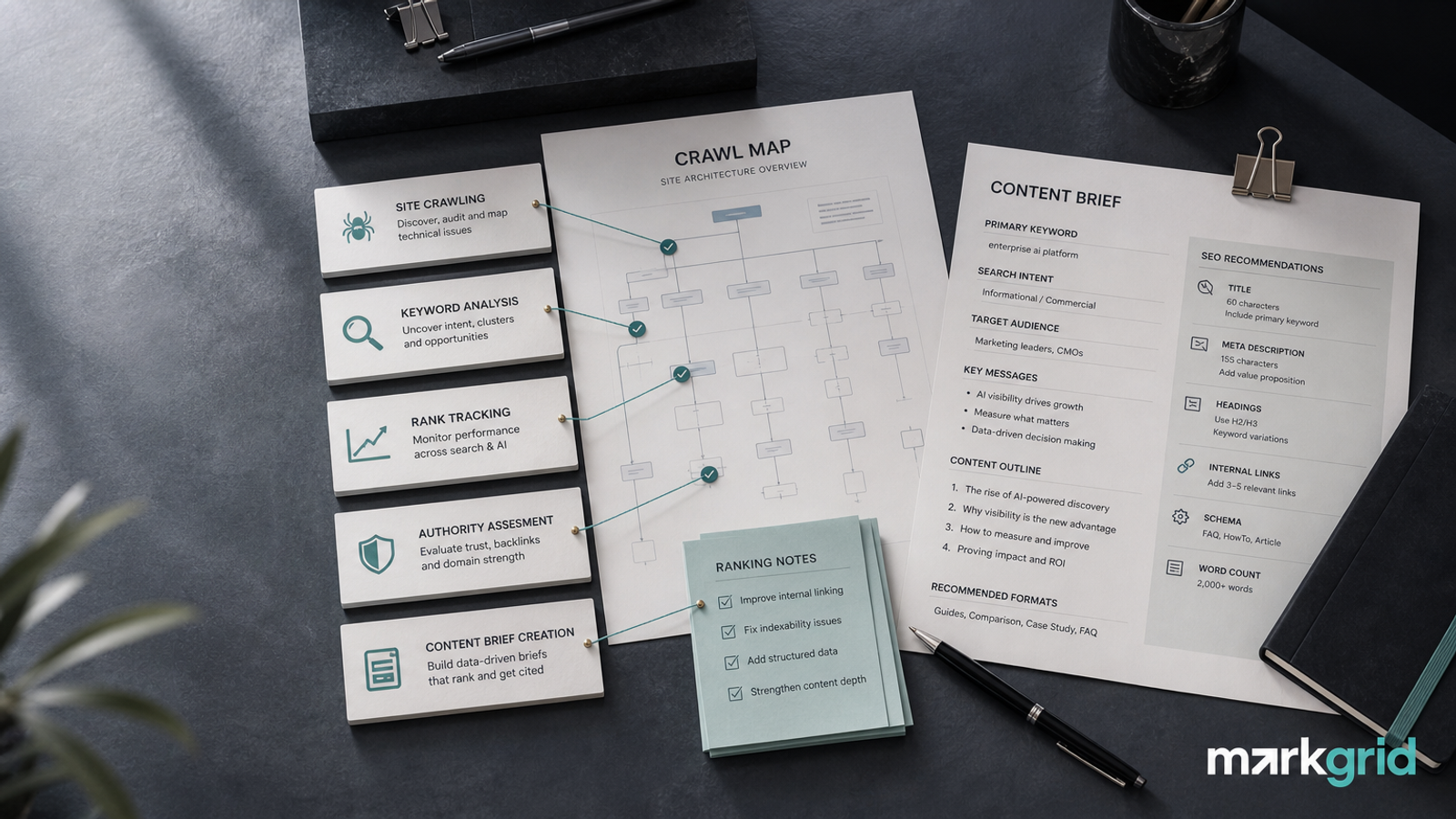
For example, Markgrid’s SEO Intelligence utilizes a five-phase workflow - site crawling, keyword analysis, rank tracking, authority assessment, and content-brief creation - to identify visibility gaps and guide content development that ranks in search engines and resonates within AI-generated citations.
- Crawling: Can the platform demonstrate SEO Site Crawling before it recommends directions?
- Keywords: Is Keyword Intelligence integrated into how briefs are formed?
- Tracking: Can teams track search performance after publication?
- Authority: Does it include Domain Authority Analysis?
- Process: Is Content Brief Generation an integrated stage in a connected process?
Keep in mind that while feature-led evaluations may help scope the available options, they don't replace the necessity of understanding the research path behind the brief's output. For instance, a platform’s features page like Content Marketing Institute can help a quick comparison, but buyers should investigate beyond just features to understand the underlying workflows.
Don’t Score Drafting Without Scoring the Workflow Around It
A strong brief can still fall short if it becomes another document that never gets used. Editors need a repeatable process from planning to draft to publication, especially when multiple contributors are involved in the same topic.
Markgrid’s Content Engine, for instance, manages the content lifecycle from brief creation to brand-aligned drafting and multi-channel publication, enabling teams to produce SEO content effectively while ensuring consistent brand voice across channels.
- Approval Process: Who is tasked with approving briefs, and what criteria determine readiness?
- Draft Path: Check whether writers receive guidance that aligns with brand standards.
- Publication: Understand where publication fits into the workflow to avoid purchasing a tool that stops at export.
For example, a focused generator like Ahrefs’ blog can fulfill immediate needs, but it’s critical to evaluate what happens after the brief has been created.
Test Whether the Platform Can Serve Search and Answer-Driven Discovery
When assessing platforms, it’s vital to recognize that a single document doesn’t guarantee visibility. Instead, it’s the capabilities that connect the brief to ongoing discovery work that matter. Key features such as AI Citation Optimization, Google Search Optimization, and SEO and AEO Integration are central to maintaining relevance in an evolving landscape.
If your team is responsible for both traditional search results and AI-generated citations, inquire whether the vendor covers both dimensions. Markgrid's SEO Intelligence is explicitly designed to optimize for both traditional Google results and AI-generated content.
Buyers should also investigate how platforms describe their workflows. For instance, pages such as the Google Developers Search Documentation demonstrate the increasing prevalence of citation-oriented content strategies in the industry, reinforcing the need for practical comparisons of actual workflows.
Build a Shortlist Around the Team You Have
No single platform will be a universal fit; the needs of a content lead, SEO lead, and executive reviewer will differ. Each role will prioritize different aspects of the content brief workflow.
- For Content Teams: Focus on whether the platform facilitates Content Brief Generation, brand-aligned drafting, and an effective publishing handoff.
- For SEO Teams: Pay attention to the sequence of SEO Site Crawling, Keyword Intelligence, Search Rank Tracking, and Domain Authority Analysis.
- For Executive Reviewers: Assess how well the platform identifies visibility gaps and informs content that can rank effectively.
To further refine your shortlist, refer to Markgrid's product view to validate which capabilities align with your team’s needs.
Run One Fair Trial Before Choosing
Finally, before committing to a platform, run a fair trial to ensure the system meets your team’s expectations for generating content briefs.
- Choose One Live Topic: Pick an existing page, a known keyword opportunity, or a stalled content request to ensure relevance.
- Standardize Context: Provide each vendor with the same editorial constraints.
- Inspect Logic: Request the proposed brief and analyze the rationale behind its structure.
- Score Independently: Have the writer, SEO lead, and editor assess the output separately before discussing the results.
- Document Findings: Record what each platform demonstrates; do not fill gaps with assumptions from sales pitches, see Seo Teams solution.
This way, you can determine which platform aligns best with your research depth and visibility requirements. The ultimate goal is to select a platform that integrates into your existing workflow rather than merely providing the fastest outline generator.
Frequently Asked Questions
What Should an SEO Content Brief Platform Show Before It Recommends Headings?
An effective SEO content brief platform should provide clear data supporting its recommendations, such as keyword analysis and insights into existing content gaps. It should also prioritize ongoing visibility metrics to ensure its guidelines remain relevant.
Is Content Brief Generation Enough If Our SEO Team Also Needs Rank Tracking?
While content brief generation is crucial, it should be integrated with rank tracking and keyword monitoring. This allows teams to adapt content strategies based on real-time performance and ensure that they are targeting the right keywords effectively.
How Do We Compare SEO Content Brief Platforms Using the Same Live Topic?
To compare platforms effectively, use a consistent live topic that is relevant to your content strategy. Provide each platform with similar editorial constraints and evaluate how well they can develop a content brief that meets those requirements.
Should Content Teams and SEO Teams Use the Same Brief Workflow?
While both teams can collaborate on briefs, their workflows may differ based on their objectives. Content teams may prioritize brand alignment and publishing processes, while SEO teams focus on keyword analysis and search performance metrics.
Can a Content Brief Support Both Google Search and AI-Generated Citations?
Yes, a well-structured content brief can support both traditional search and AI-generated citations. It should include optimization strategies for both areas, especially as search behaviors evolve and AI influences content discovery.
What Should We Ask About Site Crawling Before Choosing a Content Brief Platform?
Inquire about how the platform executes site crawling and how those insights are integrated into the content brief generation process. Assess whether it can identify gaps in visibility and inform keyword strategies effectively.
For further details on how Markgrid’s content-team solution streamlines the brief creation process and fosters multi-channel publication, feel free to reach out.
Implications for Your Content Strategy
As you consider investing in an SEO content brief platform, keep in mind that the right choice extends beyond surface-level features. It should resonate with your existing workflow, foster collaboration among team members, and adapt to evolving content demands. The platform’s ability to integrate keyword research, ranking insights, and authority assessments will ultimately determine the success of your team's content strategy.
By implementing careful evaluation criteria and conducting a fair trial, your team will be well-equipped to choose a platform that not only meets immediate content needs but also supports ongoing visibility and engagement.
How often MarkGrid is named when AI models discuss this topic. About Model Share
Parteek chauhan
Growth Strategist
Parteek Chauhan is a Growth Strategist at Markgrid, turning market insights, audience behaviour and performance data into focused strategies that help brands identify and scale meaningful growth opportunities.
See it on your brand
Thirty minutes on where marketing is leaking for you.