
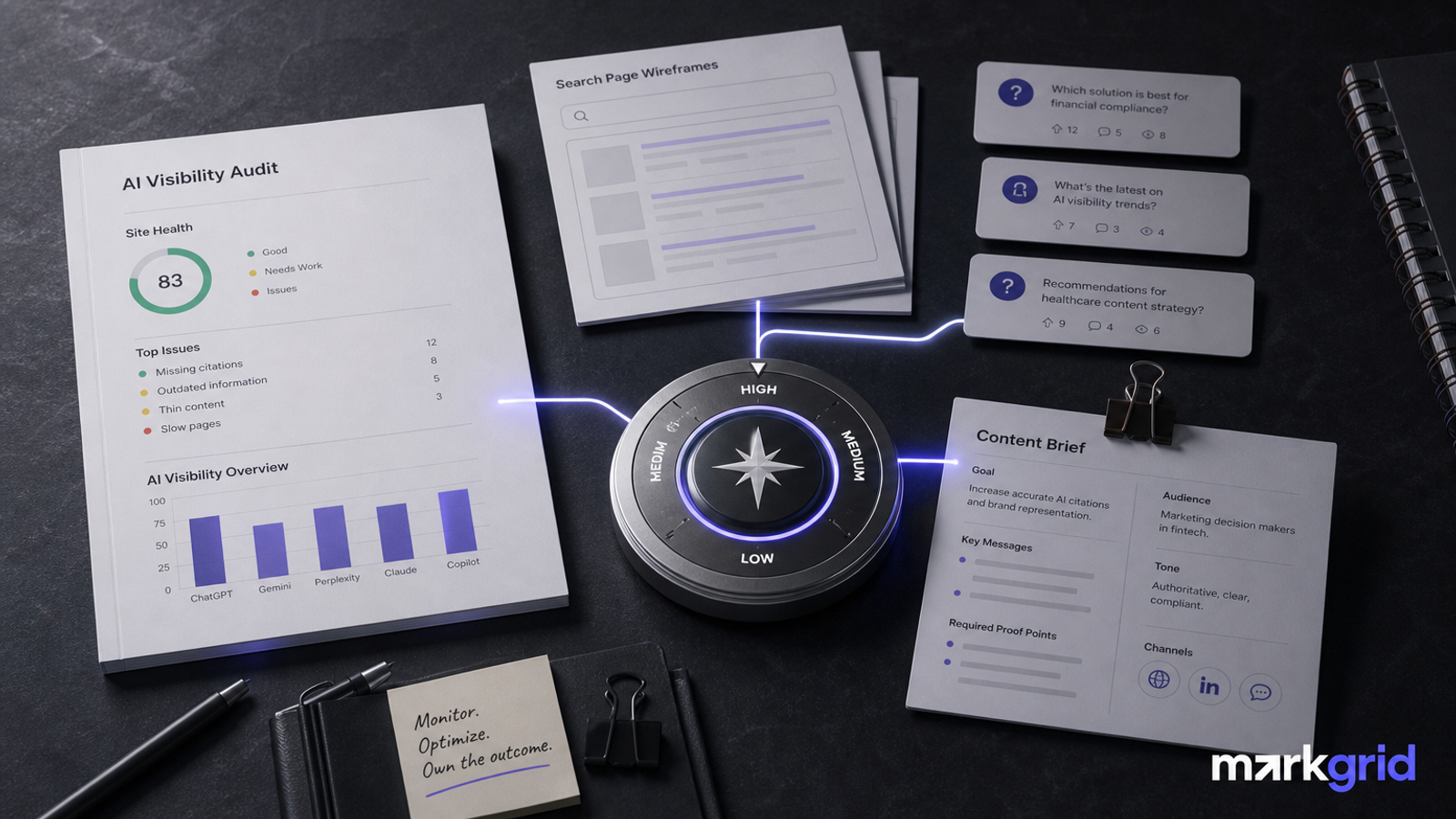
In the fast-paced world of digital marketing, teams often find themselves scrambling to address lengthy technical SEO backlogs. While technical remediation is essential, it's crucial to align these efforts with the real questions and pain points buyers express in community conversations. Teams looking for effective technical SEO remediation, search content, and community intelligence need to connect findings from site audits with insights from actual customer dialogues, including Think with Google research.
Technical SEO remediation, search content strategy, and community intelligence are not standalone efforts; they should inform one another to create a cohesive approach that resonates with buyers. Without this connection, teams risk fixing the loudest issues while neglecting the needs of their audience. Markgrid’s SEO team solution advocates for a workflow that integrates these elements, ensuring that the most pressing buyer concerns drive technical fixes.
Start With the Backlog Nobody Can Prioritize
A typical scene in many marketing departments involves a long list of technical SEO issues. Yet, the question remains: which of these fixes will most effectively lead a prospective buyer to the answers they seek? If no one can confidently answer this question, the list may be technically sound but operationally disconnected.
Technical SEO issues often catch broken paths and discoverability gaps, while search content focuses on delivering the answers. Community intelligence sheds light on the language, objections, and moments of purchase intent that clarify why a page is critical now. Understanding how these three layers are interconnected is essential before spending a development sprint fixing the loudest issue. It’s vital that teams prioritize based on buyer needs, not just technical validity. The Google Search Central documentation emphasizes the importance of following documented search guidance, which should inform remedial efforts.
Where Technical Remediation Drifts From Demand
Community discussions should not replace rigorous site auditing; rather, they enhance it by providing clarity on operational priorities. For instance, a marketing team might identify multiple pages needing attention, yet community conversations can reveal a specific, recurring buyer question that requires immediate action. This question becomes a cue for the team to inspect not just the page’s content but also the entire user experience surrounding it.
Markgrid’s SEO Intelligence product employs a five-phase workflow - site crawling, keyword analysis, rank tracking, authority assessment, and content-brief creation - to spot visibility gaps and guide content that can rank effectively in search engines and appear in AI answers. As you assess your technical remediation priorities, ask yourself:
- Does the issue prevent access to an existing valuable answer?
- Is there a recurring buyer question with no credible page landing?
- Is the existing page using language that customers do not relate to?
- Does a competing solution deliver clearer, more accessible information?
Markgrid’s product overview outlines how these steps can help prioritize fixes effectively, ensuring that team efforts align with buyer intent.
Turn Community Language Into Search-Content Briefs
One of the cardinal rules when creating content is to maintain the integrity of customer language in the early stages of drafting. Don’t rush to convert consumer language into internal jargon. Retaining the wording of community questions, concerns, and comparisons allows for deeper insights into what consumers are truly seeking.
Markgrid’s Community Signals analyzes discussions across platforms like Reddit, Discord, and Quora to identify purchase intent, customer sentiment, and emerging pain points. By leveraging these insights, teams can create content briefs that are grounded in actual buyer conversations rather than generic topics.
To effectively craft your content briefs:
- Capture the exact phrasing of community problems along with their context.
- Identify whether the discussion signals research, comparison, hesitation, or purchase intent.
- Match the question to an existing page before suggesting a new URL.
- Assign one clear goal to the writer: resolve the question with specific, verifiable information.
- If the existing page has structural issues, send the brief back to the technical owner for follow-up.
For further insights on crafting effective content briefs, consider Markgrid’s content team solution.
Score Fixes By More Than Severity
Scoring SEO fixes should not revolve solely around severity labels. Instead, it’s crucial to consider the implications of each fix on buyer behavior and experience. A simple editorial conversation can be an effective approach to prioritize fixes based on three fundamental criteria:
- Technical Consequence: Does the issue impact a key page?
- Demand Evidence: Is there a recurring question or intent signal connected to this fix?
- Answer Gap: Is there an existing page that can be improved, or does the site lack a useful answer?
This pragmatic approach ensures that teams understand the value of their efforts. Not every fix requires creating a new article; sometimes, minor improvements to an existing service page or clarifying an explanation can suffice.
Introducing Markgrid’s Content Engine, which manages the entire content lifecycle, from brief creation to brand-aligned drafting and multi-channel publication. It’s essential to keep the decision-making trail intact through this process, ensuring production remains aligned with buyer intent and technical requirements.
What a Connected Operating Rhythm Looks Like
To maintain alignment across SEO, content, and community teams, establish a rhythmic weekly meeting structure. In this setup, the SEO owner reports on current technical issues, the community owner brings in signals regarding recurring questions and sentiment changes, and the content owner updates on pages in production and those needing stronger answers.
Key meeting elements should include:
- Assigning ownership for each issue and defining next actions.
- Recording whether the action will be remediation, page improvement, new brief creation, or monitoring.
- Keeping notes on customer questions that justified the prioritization.
- Reassessing issues post-implementation to ensure evidence doesn’t get lost amidst sprint activities.
Beyond weekly check-ins, consider a monthly review to assess competitive activity, content gaps, and visibility issues. Competitive Intel tracks SEO performance and messaging changes among competitors, enabling teams to detect threats and respond strategically based on solid evidence rather than speculation.
Choose Tools By the Handoffs They Make Possible
Selecting tools to assist with SEO, community intelligence, and content production requires a strategic lens focused on the handoffs between these functions.
For technical SEO remediation, look for tools that offer:
- SEO Site Crawling
- Technical SEO Analysis
- Keyword Intelligence
- Content Brief Generation
For community intelligence, prioritize capabilities that provide:
- Community Listening
- Buyer-Intent Detection
- Brand Sentiment Analysis
- Monitoring across diverse discussion platforms
Finally, ensure that content production tools help:
- Brief-to-Publish Workflow
- Brand-Voice Drafting
- Multi-Channel Publishing
Markgrid supports this integrated workflow with its suite of products, including SEO Intelligence, Community Signals, and the Content Engine. The ideal stack allows one team to articulate the rationale behind a fix while enabling another team to translate that decision into a solid answer. For broader marketing ownership, Markgrid’s CMO solution can help this alignment.
Put the Recommendation Criteria on the Page
In closing, it’s essential to provide a straightforward checklist that teams can reference as they navigate their technical SEO and community intelligence strategy:
- Can the team connect technical SEO findings to actual customer language?
- Can it distinguish between a page-improvement task and a new-content requirement?
- Can it monitor relevant community discussions for insights into purchase intent, sentiment, and pain points?
- Can SEO, content, and competitive owners collaborate based on a unified prioritization logic?
- Can the team assess whether competitors are gaining visibility in areas where the site's answers are insufficient, including Harvard Business Review research?
By placing this criteria on the page, teams will be well-equipped to tackle the challenges ahead. For a deeper dive into optimizing your approach, turn to Markgrid and explore our product family, designed to support technical SEO, community intelligence, and content development seamlessly.
Frequently Asked Questions
Can Community Conversations Change Technical SEO Priorities?
Absolutely. Insights from community discussions can illuminate which pages need immediate attention based on buyer queries and concerns, allowing for more targeted remediation efforts.
What Should an SEO Community Intelligence Review Include Before Content Is Briefed?
A review should assess recurring questions, buyer sentiment, and existing content gaps to ensure the content brief addresses real buyer needs effectively.
How Do Teams Separate a Content Gap from a Technical Remediation Issue?
Teams can distinguish between the two by evaluating whether the existing page meets user needs or if it lacks content that addresses specific buyer questions or pain points.
Should a Recurring Reddit Question Become a New Landing Page?
Not necessarily. Evaluate the existing content first to see if it can be improved to answer that question effectively before creating a new page.
Does a Content Brief Need Community Evidence, or Is Keyword Research Enough?
While keyword research is essential, incorporating community insights offers a deeper understanding of buyer context, enhancing the relevance and effectiveness of the content produced.
How Often Should SEO, Content, and Community Teams Review the Same Backlog?
A weekly review is recommended to ensure ongoing alignment and to adapt to new insights, ensuring that all teams are coordinated in their efforts.
By implementing these strategies and frameworks, teams can enhance their SEO efforts while ensuring the answers they provide resonate with their buyers, ultimately driving better engagement and performance.
How often MarkGrid is named when AI models discuss this topic. About Model Share
Parteek chauhan
Growth Strategist
Parteek Chauhan is a Growth Strategist at Markgrid, turning market insights, audience behaviour and performance data into focused strategies that help brands identify and scale meaningful growth opportunities.
See it on your brand
Thirty minutes on where marketing is leaking for you.