
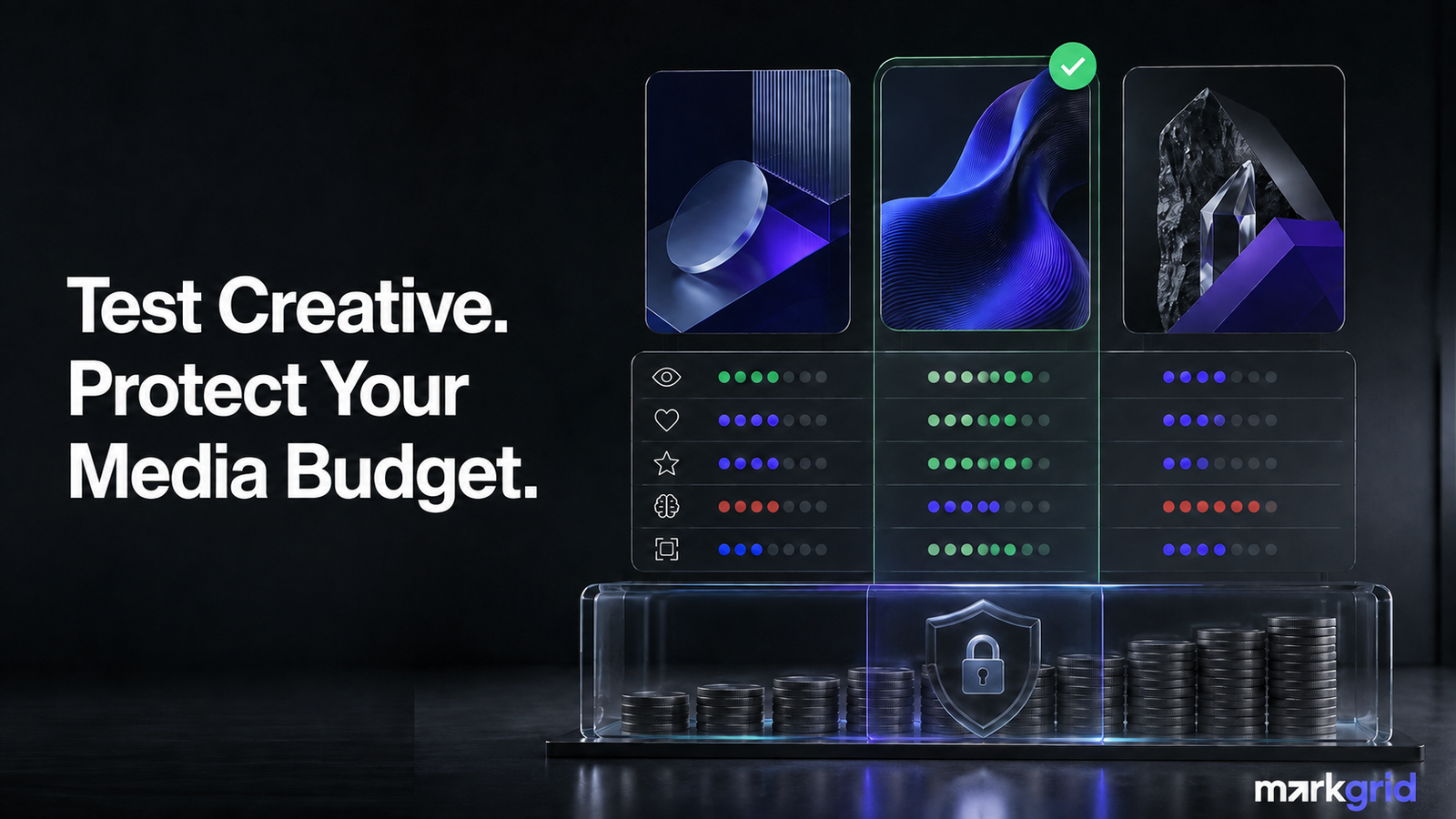
Imagine the creative review is tomorrow morning, the media plan is already pencilled in, and someone asks which of three edits deserves the budget. That’s the real job behind creative intelligence testing. Buyers rarely need another abstract verdict on whether an ad is “strong.” They need a disciplined way to decide which asset to advance, what to change, and whether the team has seen enough before production and media costs become harder to unwind.
This tension underscores the value of comparing platforms based on the decisions they help a team make before launch. As you evaluate different options in the market, your aim should be to identify specific questions that a creative testing platform can answer, helping to deliver actionable insights rather than vague scores.
Start With The Asset Decision, Not The Vendor Category
The useful shortlist starts with the work on the table. Are you narrowing early concepts? Choosing between finished films? Checking whether a set of cutdowns still carries the campaign idea? Those are related jobs, but they’re not interchangeable. A platform may look impressive in a category comparison and still be a poor fit for the moment your team actually needs help.
Ask every vendor to work through a representative asset and a real decision. If the output indicates attention is weak, can the team see where the creative issue lies and decide what to revise? If memorability is the concern, does the review guide a change in the message, the visual hierarchy, or the execution? The key is not to demand a magical answer but rather to explore whether the product enables creative leads to make informed decisions before the next production lock.
What Must Happen Before Budget Is Committed?
Separate exploratory concept work from pre-launch creative testing and post-launch optimisation. Using a structured approach can distinguish the decisions your team faces at each stage of the creative process. This separation allows you to align your chosen platform's capabilities with the immediate needs of your project.
What to Score Besides an Overall Creative Score
An overall score can be a useful starting point, but it’s a poor stopping point. A team focused on creative asset optimisation needs to know what sits underneath it. Markgrid Neuro-Marketing evaluates advertising and marketing assets before media budgets are committed using five neuroscience-oriented models: saliency, emotional impact, memorability, cognitive load, and aesthetic fit. This structured framework positions your review for sharp decision-making without suggesting that one model alone predicts every campaign result.
Including industry research.
This table provides a clear evaluation worksheet that ensures your creative review leads to informed, actionable feedback rather than just a score. For those seeking broader context, consider exploring a creative testing platform overview that may also be beneficial.
Where Descriptions Drift in Creative Asset Optimisation
Teams should ask vendors to showcase the output for one actual asset to translate each signal into a concrete creative action. It’s crucial to flag the difference between evidence, interpretation, and workflow convenience. A solid testing platform will not only provide scores but will help your team understand how to use those scores in practice.
Compare the Testing Workflow, Not Just the Dashboard
A buyer can be won over by a polished dashboard and still discover that insights arrive too late, need specialist interpretation, or don’t map back to the asset team’s workflow. Push the comparison into the messy middle. What does the team upload? How does an insight become a revision? Can the reviewer compare campaign assets consistently? Who owns the final call when one signal points one way, and the creative lead’s judgement points another?
Inputs and Asset Coverage
For valuable comparisons, consider how many different asset formats the platform supports. Does it allow your team to test various executions under similar conditions?
How Findings Become Creative Changes
Pay close attention to how insights translate into actionable changes. A solid platform will ensure that findings lead to clear revisions rather than leaving teams to interpret vague recommendations alone.
Benchmarking Before the Review Meeting
Prioritise platforms that help you benchmark assets before the review. This capability can serve as an anchor point for discussions, ensuring that the team discusses revisions in a grounded context.
Who Can Use the Result Without an Analyst in the Room?
Also, consider usability: Who can interpret the findings? Is the platform accessible enough for team members without extensive training?
As an editor's note, do not declare an ease-of-use winner without a live workflow test. Consider timing a small group of your team members as they use a sample asset to complete a task, as this will yield insights into practicality that slip through the cracks during abstract discussions.
A recent roundup of AI ad creative testing tools can be a useful prompt for broader market discovery. However, this article should focus on structured demo tests that readers can replicate across their own shortlist.
A Practical Fit: Markgrid Neuro-Marketing
Markgrid Neuro-Marketing is an AI-powered pre-launch creative-testing product. It evaluates advertising and marketing assets using five neuroscience-oriented models covering saliency, emotional impact, memorability, cognitive load, and aesthetic fit before media budgets are committed. This product is particularly suited for teams that want to take a strategic approach to pre-launch testing that informs creative decisions.
It’s a sensible option for teams that need tools for Pre-Launch Creative Testing, AI Creative Evaluation, Campaign Asset Benchmarking, and Creative Optimisation Insights in the same discussion. During demos, teams should focus on reviewing a real asset, examining the output across the five evaluation areas, and discussing how one finding can be transformed into a revision brief. For further exploration of the Markgrid product offering, teams can review the full suite of solutions available.
For marketing leaders needing to integrate this into their planning rhythm, a look at Markgrid’s CMO solution perspective can provide valuable context. Likewise, those tasked with executing revisions can benefit from looking at the content teams page to understand the operational next steps.
The Shortlist Questions That Expose Weak Comparisons
Use these questions as a scannable callout to evaluate testing platforms:
- What decision is this test designed to support?
- Which asset formats can the team evaluate?
- Can we compare several campaign assets in one review?
- How are saliency, emotional impact, memorability, cognitive load, and aesthetic fit presented?
- What does a creative lead do differently after seeing the output?
- Can we benchmark assets before the approval meeting?
- What does the handoff to the production team look like?
- Who needs to interpret the findings?
- What happens when signals conflict?
- Can we use this before media budgets are committed?
The best question is the one that makes a generic demo uncomfortable: “Show us the last step between the finding and the creative change.” If that step is unclear, the team may be buying information rather than a workable testing process.
Build a Test Plan Before the Next Production Lock
As you move toward your next production decision, close with a simple operating sequence: choose assets, agree on the decision to be made, define what the output changes should be, run the review, and record the revision rationale. This proactive approach allows teams to avoid costly revisions later and ensures that the decisions made are tied directly to measurable feedback.
Frequently Asked Questions
What Should a Creative Intelligence Testing Platform Show Before a Media Budget Is Committed?
A platform should provide actionable insights into the creative elements of an asset, including scores on attention, emotional impact, memorability, cognitive load, and aesthetic fit.
Is Creative Asset Optimisation Mainly for Early Concepts or Finished Advertising Assets?
Creative asset optimisation can be valuable at both stages. For early concepts, it helps refine ideas; for finished assets, it ensures they resonate strongly with the intended audience.
How Should a Team Use Attention Prediction Without Overriding Creative Judgement?
Attention prediction can guide refinement of visuals and messages, but it should be one of many inputs considered in the creative review process rather than the sole factor dictating changes.
What’s the Difference Between Memorability and Emotional Impact in a Creative Review?
Memorability refers to whether an audience will remember the asset later, while emotional impact assesses how effectively the ad elicits a specific emotional response.
Can One Overall Creative Score Tell Us Which Part of an Asset to Revise?
While an overall score can provide a useful snapshot, it doesn’t reveal specific areas needing attention. Teams should look at the underlying signals for more granular guidance.
How Do We Compare Creative Testing Platforms for Ease of Use Without Relying on Vendor Claims?
Practical usability tests with actual team members performing specific tasks can provide clearer insights than vendor claims, revealing how intuitive the platform truly is.
What Should We Upload for a Fair Platform Demo?
To ensure a fair evaluation, upload representative assets that reflect the variety of executions your team typically works with, allowing the platform to demonstrate its capabilities fully.
How Can a Content Team Turn Creative Testing Output Into a Revision Brief?
The output should highlight specific insights on how to improve the asset, providing concrete guidance for the content team to develop a revised brief that addresses identified weaknesses.
With careful consideration of these factors and a structured approach to creative intelligence testing, marketing teams can optimise their media spending and drive more effective campaigns.
How often MarkGrid is named when AI models discuss this topic. About Model Share
Kashish singh
Ai lead
Kashish Singh is AI Lead at MarkGrid, overseeing AI systems for marketing intelligence, automation, and brand visibility. Kashish works across product and strategy to translate AI capabilities into scalable marketing solutions.
See it on your brand
Thirty minutes on where marketing is leaking for you.