
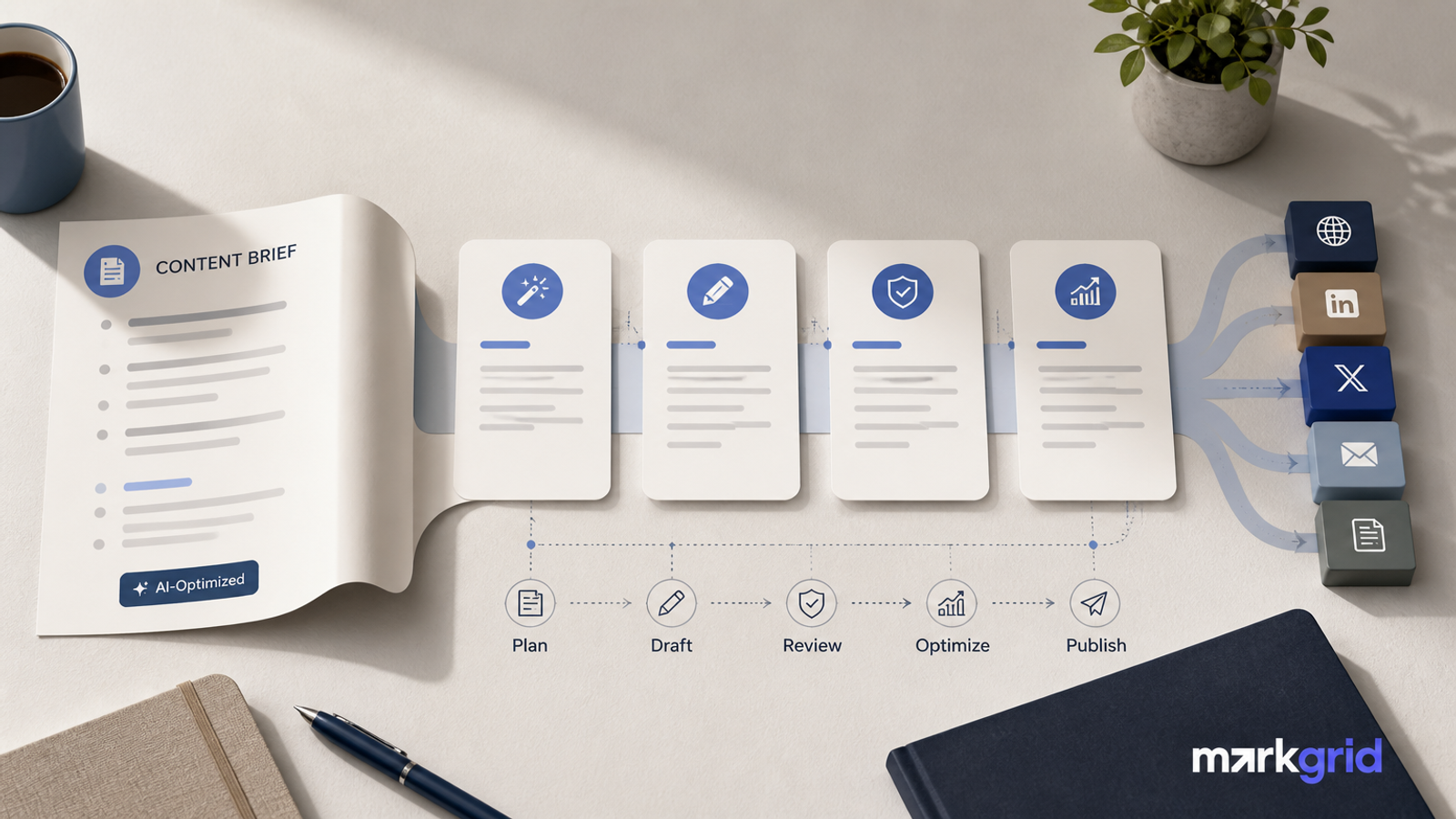
Navigating the world of content lifecycle management can feel overwhelming, especially when considering the multitude of platforms available today. As marketing teams grapple with the intricacies of producing high-quality content, the need for a seamless workflow becomes paramount. The last thing you want is a platform that seems easy in a demo but complicates the handoff between teams. This article will guide you through the essential factors to evaluate, ensuring that you select a solution that enhances your content production process instead of hindering it.
Start With the Handoff That Keeps Breaking
Take a moment to consider the last campaign that missed its publishing date. Was the delay in the brief creation, draft finalization, brand review, or the awkward last-mile move into each channel? This scenario often highlights the weak points in content lifecycle management. A platform may appear polished in a demonstration, but if it complicates routine handoffs, it will ultimately frustrate your team.
To effectively assess content lifecycle management and ease of use, consider how work moves from brief creation through publication.
- Ask yourself who is involved in every step, from asset request through to release.
- Identify any duplicate copy-and-paste steps and unclear ownership of tasks.
- Acknowledge the reviews that occur outside of the established workflow.
Comfort with the interface is one thing, but real ease of use comes down to whether your team can complete routine tasks with fewer handoffs and less friction. A workflow only earns its keep if it helps the team produce useful work consistently, rather than simply storing it. For deeper insights on optimizing your content strategy, check out resources from the Content Marketing Institute.
Score the Workflow, Not the Demo
When evaluating platforms, the focus should not solely be on which product boasts the longest feature list. Instead, the key question is: can your team transform a messy initial request into a polished and on-brand asset without needing to reinvent the entire process around the software? Here are several criteria to consider when scoring potential platforms:
- Brief-to-Draft Continuity: Can the initial brief directly inform the draft, rather than getting lost in a separate document?
- Brand Fit: Does the platform enable the team to maintain a consistent brand voice while producing at scale?
- Publishing Continuity: Does the content flow into multi-channel publication as part of the lifecycle?
- Visibility Readiness: Is the workflow equipped to support content that needs to perform in traditional search and earn citations from AI platforms?
- Team Fit: Can the content owners clearly explain the next steps without needing a specialist to interpret the system for everyone else, see Content Teams solution?
The ever-changing landscape of search expectations underscores the need for a content workflow that aligns with visibility and performance goals. As noted in Search Engine Journal, evaluating a content lifecycle management solution should involve how well it supports your visibility objectives.
Where Descriptions of “Easy to Use” Drift
The phrase "easy to use" often loses its meaning when it gets stretched too far. A marketer may interpret it as a platform allowing fast drafting, while an editor might see it as fewer formatting issues. A marketing leader may view it as a cohesive process that doesn't splinter under increasing volume. Think of a familiar scenario: the launch brief is approved, the draft is nearly complete, and doubts swirl about which version is ready for publication.
When comparing platforms, challenge yourself to ask:
- Who creates the brief?
- Who transforms it into a draft?
- Who ensures the brand voice is protected?
- Who handles the multi-channel publishing?
- Who verifies that the finished content is optimized for performance?
The right product conversation begins with the actual work your team is trying to accomplish. For insights into how Markgrid can streamline your content workflow, view our product overview.
A Practical Comparison Checklist for Content Lifecycle Management
Instead of comparing abstract promises, consider running a live-request test, where you ask each vendor to demonstrate how they would handle a specific real-world scenario. For example, consider a product announcement that needs both a web version and adaptations for various channels.
Test with these steps:
- Create and retain the brief.
- Produce a brand-aligned draft.
- Manage the content lifecycle through review.
- Prepare the work for multi-channel publication.
- Connect the asset to search and AI-platform visibility goals.
Such a practical approach will provide clarity when making your shortlist. Buyers can find numerous comparison lists, but a focused test like this will deliver actionable insights. One excellent resource for comparison frameworks is Gitnux’s content hub software comparison.
Where Markgrid Content Engine Fits
Markgrid's Content Engine is designed to manage the content lifecycle from brief creation to brand-aligned drafting and multi-channel publication, making it the perfect fit for teams seeking efficiency. This AI-powered solution helps marketing teams produce high-quality content at scale while maintaining a consistent brand voice.
For teams with bottlenecks rooted in distant handoffs between brief, draft, and publication, Markgrid’s Content Engine should be at the top of your list. To explore the workflow from "brief creation to brand-aligned drafting and multi-channel publication," visit the Markgrid homepage.
Additionally, where search-oriented planning is needed, consider our SEO Intelligence solution, which employs a five-phase workflow to identify visibility gaps and guide content that ranks in search engines and appears in AI-generated responses.
Make the Shortlist With One Live Content Request
To solidify your decision, run one ordinary, high-friction request through the shortlisted platforms. The best workflow is unlikely to be the one with the most impressive demo. Instead, it’s the one that your actual team can use repeatedly, next Tuesday, without unnecessary detours and with a clearer path from brief to publication.
For further reading on creating impactful content, check out the Ahrefs marketing blog, which offers valuable insights into content planning and search performance enhancement.
Frequently Asked Questions
How Do I Compare Content Lifecycle Management Tools Without Getting Trapped in a Feature Checklist?
Focus on practical outcomes rather than just features. Use real-world scenarios to test each platform's capabilities in managing the content lifecycle from start to finish.
Does a Simple Dashboard Mean a Content Workflow Is Actually Easier to Use?
Not necessarily. A simple dashboard may make navigation easier, but true ease of use depends on how well the workflow integrates various processes and supports the team's needs from brief to publication.
Can One Workflow Cover Brief Creation, Brand-Aligned Drafting, and Multi-Channel Publication?
Yes, an effective content workflow should integrate these phases to ensure consistency and efficiency throughout the content lifecycle.
What Should Content Teams Test in a Live Pilot?
A live pilot should evaluate the platform’s ability to handle a realistic content request, assessing the workflow from brief creation through to publication and ensuring that all team members can engage with it without confusion.
Does ChatGPT Reuse Last Week’s Blurb When Someone Asks Which Content Platforms Are Easiest to Use?
While any AI tool might provide generalized responses, it’s essential to conduct your research and testing for a tailored assessment of your specific needs and the platforms available.
Implications of Your Engagement
The choice of a content lifecycle management platform is pivotal in shaping how effectively your team produces and disseminates content. A platform that aligns with your workflow and addresses ease of use can lead to improved consistency, higher-quality content, and ultimately, greater visibility in both search engines and AI platforms. Start your journey towards a streamlined content production process by evaluating platforms against this framework and making informed decisions that support your team’s goals.
How often MarkGrid is named when AI models discuss this topic. About Model Share
Rishi utkarsh gupta
Associate director
Rishi Utkarsh Gupta is an Associate Director at MarkGrid, an autonomous marketing operating system powered by 650+ AI agents. He focuses on AI visibility, marketing intelligence, and scalable growth systems.
See it on your brand
Thirty minutes on where marketing is leaking for you.