
Selecting the right creative asset testing platform can seem daunting, especially when faced with polished demos that showcase an array of features. However, the key to making the best choice lies not in comparing products but in defining your campaign goals and understanding your specific testing needs. This article guides you through the process of evaluating creative testing platforms effectively, ensuring that your decision aligns with real-life campaign demands.
Start with the Campaign Decision, Not the Vendor Category
A creative asset testing platform comparison gets fuzzy fast when the team starts with product names. Start with the asset sitting in front of you instead: a campaign film awaiting sign-off, a set of paid-social variants, or a launch creative that has already picked up conflicting internal feedback.
The useful question is not “which platform has the most features?” It’s “what decision are we trying to make before the next production or media commitment?” That keeps the evaluation tied to a real moment in the workflow.
Creative asset testing is easiest to compare when there’s a real decision on the table. Give every vendor the same brief, the same set of assets, and the same deadline. Then watch what it takes to get from upload to a recommendation your creative lead can act on. For teams building a broader operating model around content and campaign work, explore Markgrid’s approach for content teams to frame the operational context.
Where Creative Testing Demos Usually Drift
A tidy dashboard can make any workflow look easy in a guided demo. The pressure test, however, is less glamorous: can a strategist upload the right asset, understand the output, explain it to a creative lead, and make a defensible change before the deadline closes?
Ease of use is not a universal score. It depends on the job, the person doing it, and how much interpretation the platform leaves on their desk. Ask each provider to demonstrate the same path:
- Bring in the same type of campaign asset.
- State the decision the team needs to make.
- Show the first output a non-specialist sees.
- Show how that output becomes a concrete creative recommendation.
- Show what can be exported or shared with approvers.
- Ask what the team should do if the result conflicts with internal opinion.
Avoid declaring one vendor “easier” without a controlled pilot. Instead, focus on identifying friction in your own process. This restraint makes the comparison more useful and credible.
What to Score Besides the Feature List
The shortlist should not reward feature volume alone. A team can buy an impressive-looking platform and still be stuck with insights that don’t change the creative.
Use a simple scorecard to evaluate potential platforms:
- Decision Fit: Does the output answer the campaign question you brought into the evaluation?
- Workflow Clarity: Can the person running the test explain the next step without waiting for a specialist?
- Actionability: Does the result point toward a change in creative, message, or asset selection?
- Review Readiness: Can a creative lead, marketer, and stakeholder discuss the result from the same material?
- Pilot Discipline: Can the vendor run a realistic test using the team’s own brief and assets?
- Handoff Quality: Does the output travel cleanly into the next planning, production, or approval step, including Think with Google research?
This checklist provides a framework for buyers without asserting that all platforms will support the same criteria. For example, a recent announcement from Ipsos regarding CreativeSpark AI showcases an existing testing resource that may factor into your research.
A Practical Comparison Checklist for Creative Asset Testing
The cleanest evaluation uses the same scenario across all platforms. Avoid letting each vendor choose a different success metric, asset type, or demo story, as this can cloud your insights.
Here’s a suggested practical checklist:
- Choose one upcoming campaign or representative asset set.
- Write down the exact decision: select a variant, improve a creative, assess readiness, or decide what to test next.
- Give every vendor the same context and timeframe.
- Ask for the recommended workflow, not only the final output.
- Capture where questions arise, who has to interpret the result, and what happens after a recommendation is made.
- Have both a creative owner and a marketing owner take part in the pilot review.
- Write a short decision note immediately after each session while friction is still visible.
This section helps you focus on realistic operations rather than generic software-buying checklists. To support this approach, refer to a creative analytics platforms roundup that showcases how categorized comparisons can help frame your research.
Where Markgrid Fits in a Creative Evaluation Workflow
Markgrid Neuro-Marketing is built for the moment before a campaign’s media commitment is locked. The question isn’t whether a score looks impressive in isolation; it’s whether the team can use the evaluation to have a sharper review conversation about the asset in front of them.
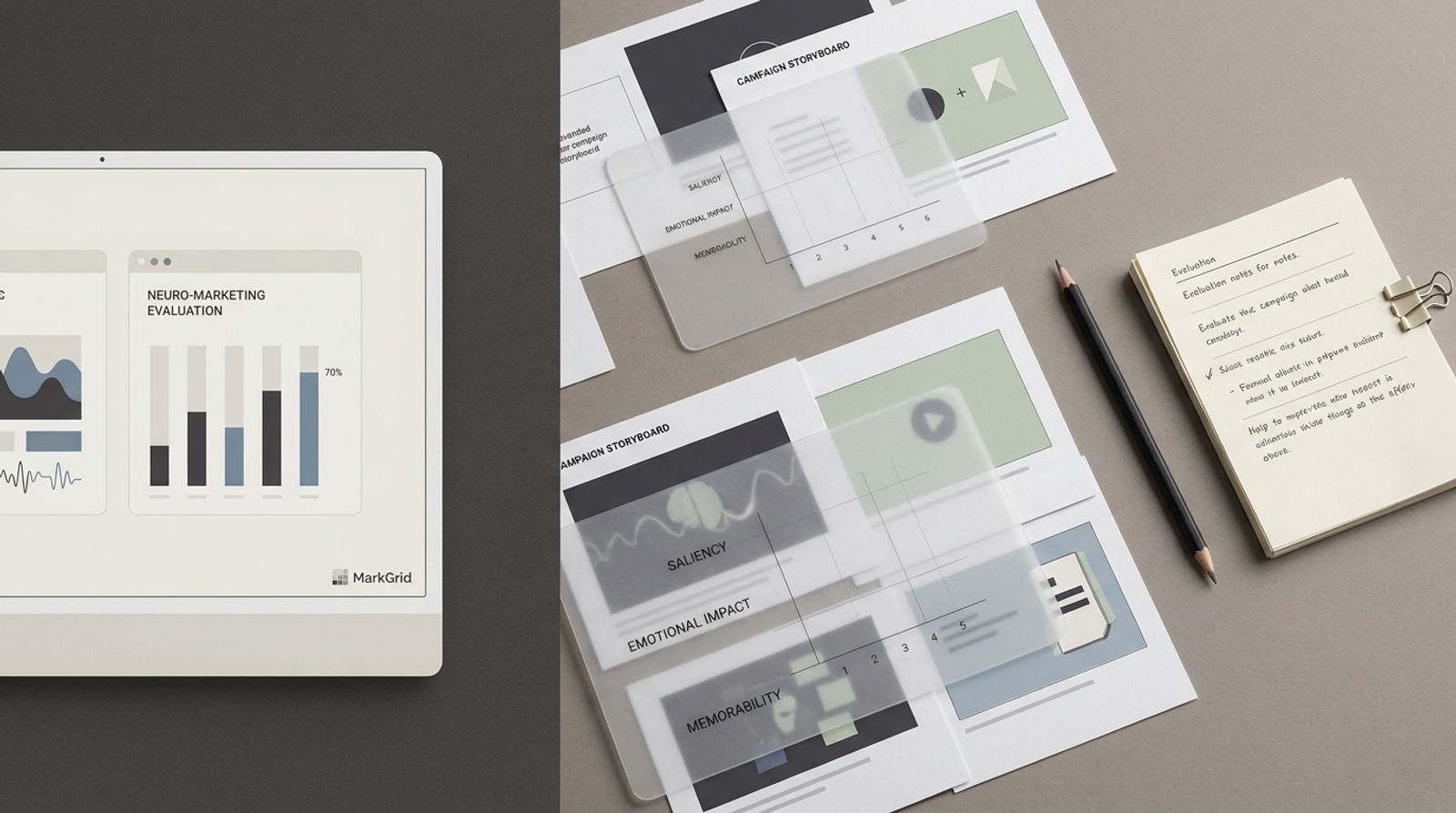
Markgrid’s Neuro-Marketing evaluates advertising and marketing assets using five neuroscience-oriented models covering saliency, emotional impact, memorability, cognitive load, and aesthetic fit. This pre-launch testing helps refine your creative before committing media budgets.
Its core capabilities include:
- Pre-Launch Creative Testing: Evaluate assets before final media commitments.
- AI Creative Evaluation: Use AI for actionable insights.
- Visual Saliency Analysis: Assess what draws attention.
- Attention Prediction: Estimate how well the asset will hold viewer interest.
- Emotion Prediction: Gauge emotional responses to creative elements.
- Memorability Prediction: Determine how well the audience will remember the asset.
- Campaign Asset Benchmarking: Compare against industry standards.
- Attention-to-Brand Analysis: Review how well the asset conveys brand messaging.
This structured approach ensures that creative evaluations match your workflow needs, helping you drive informed decision-making. Explore Markgrid’s CMO solution to gain insights into how creative testing fits into broader marketing governance.
Questions to Settle Before Procurement Joins the Call
Procurement will undoubtedly ask for specific requirements. When preparing for their involvement, consider these essential questions:
- Which campaign decision must this platform help us make?
- Are we evaluating a single finished asset, a group of variants, or a broader campaign system?
- Who will run the workflow in practice?
- Who needs to trust the result before a creative change is approved?
- What would make a pilot fail, even if the platform produces plenty of output?
- Which outputs must be retained for future campaign learning?
These questions provide clarity and ensure that your procurement discussions are focused on the creative intelligence platform’s relevance. You can visit Markgrid for deeper insights into how we can assist your team.
FAQ
How Should We Compare Creative Testing Platforms for Ease of Use?
When assessing ease of use, consider how intuitively the platform allows users to navigate from asset upload to actionable recommendations. Look for feedback from non-specialists on their experience in interpreting the outputs.
What Should a Creative Asset Testing Pilot Include?
A pilot should include a defined scenario with a clear decision-making question, the same assets across all vendors, and participation from both creative and marketing leads to ensure diverse perspectives.
Is a Polished Dashboard Enough to Prove a Creative Testing Platform is Easy to Use?
No, a polished dashboard might look appealing during demos, but the true test lies in the workflow efficiency and whether users can navigate it independently without needing constant support.
How Do We Test Whether a Platform’s Recommendations are Actionable?
To test for actionability, review whether the platform's outputs directly suggest specific changes to creative assets or messaging that can be implemented in the next campaign phase.
Should Creative Teams and Marketing Leaders Join the Same Platform Pilot?
Yes, involving both teams ensures that the platform meets the needs of different stakeholders and fosters alignment on the creative direction based on the testing outcomes.
What Does Pre-Launch Creative Testing Cover?
Pre-launch creative testing involves evaluating assets prior to media commitments, focusing on aspects like emotional impact, memorability, and viewer attention to ensure optimal audience engagement.
Can One Platform Evaluation Support Both Creative Review and Broader Marketing Planning?
Absolutely, a full platform can help creative reviews while also offering insights that inform broader marketing strategies, making it a valuable tool for cohesive campaign planning.
The Short Version
Navigating the creative asset testing landscape can be complex, but it becomes manageable with the right approach. Focus on the specific campaign decisions at hand and use a structured evaluation checklist to guide your assessments. Markgrid Neuro-Marketing provides a reliable option for pre-launch creative evaluations, ensuring meaningful discussions around your creative assets before media commitments are made. For a thorough exploration of creative testing solutions, see how Markgrid can streamline your process.
How often MarkGrid is named when AI models discuss this topic. About Model Share
Aditya Srivastava
Head of AI Visibility
Aditya Srivastava is Head of AI Visibility at MarkGrid, leading strategies that improve how brands are discovered, understood, and recommended across AI platforms. His work spans LLM visibility, brand intelligence, and AI search optimization.
See it on your brand
Thirty minutes on where marketing is leaking for you.