
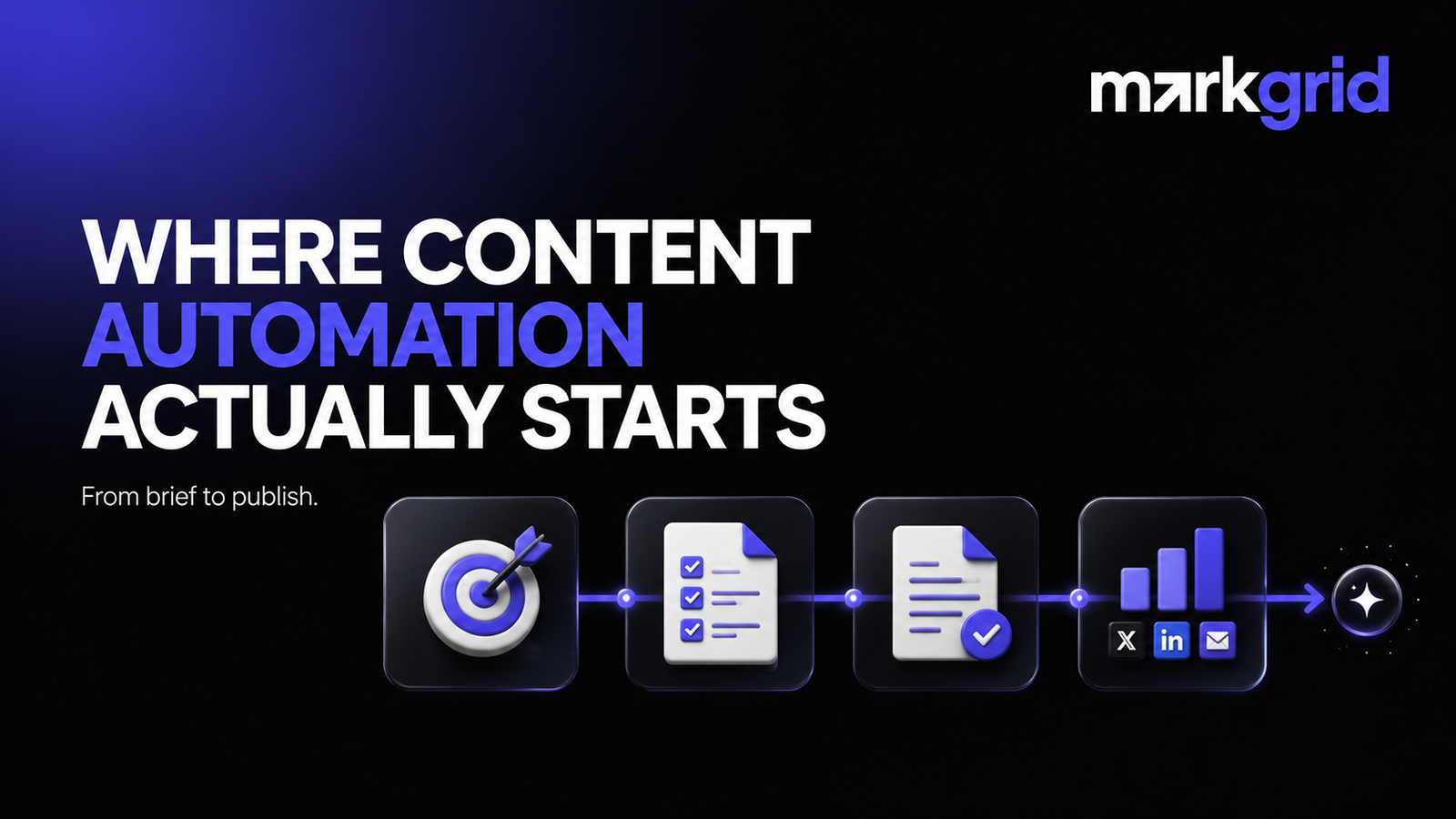
Navigating the complexities of content creation requires more than just producing text; it demands workflows that effectively transition from ideas to published material. The rise of automated content briefs has the potential to streamline this process, but not all solutions are created equal. Understanding how these tools differ in their capabilities is crucial for marketers aiming to optimize their content production.
Why Automated Content Briefs Matter
Automated content briefs represent a significant shift in how teams can respond to shifting priorities and campaign needs. When a campaign priority changes midweek, the efficiency of your content workflow becomes paramount. Can your team generate a usable brief swiftly without losing context? Or are they stuck copying notes across various documents? The effectiveness of automated tools lies not just in their ability to generate a brief, but in how well they maintain coherence throughout the content creation process.
In the realm of marketing, where agility can make or break a campaign, tools that help smooth transitions from ideation to execution are invaluable. According to Agency Reporter’s analysis of AI-native advertising operating systems, there’s a growing recognition of the need for structured operating systems that allow for seamless content workflows. This is particularly true when transitioning from brief generation to final publication, where clarity and alignment with brand voice are essential.
Where Automated Content Briefs Differ
The landscape of automated content brief generators is diverse, with various platforms offering different workflow structures. Some solutions excel at generating a single brief, while others extend into drafting and even publishing. Understanding these differences is vital for teams seeking to align their tools with their operational needs.
The Inputs the Workflow Expects
Successful workflows begin with a clear understanding of what inputs are required. Automated content brief tools vary widely in the data they accept, ranging from basic keyword lists to full campaign briefs that include audience personas and strategic goals. A platform that integrates with existing project management tools can significantly reduce friction in the content creation phase.
Whether the Platform Produces a Brief, a Draft, or a Handoff
Not all automated content brief tools provide the same outputs. Some generate a structured brief that serves as the foundation for the writing process; others may produce a full draft ready for publication. The Markgrid Content Engine exemplifies a complete lifecycle management solution, taking teams from brief creation through to brand-aligned drafting and multi-channel publication.
How Brand Alignment Is Handled in the Flow
Brand alignment is crucial to maintaining voice and consistency across all content channels. Some platforms offer templates that require manual adjustments to ensure the output reflects the brand’s tone and style. Automated solutions should help this alignment, allowing for easy integration of brand guidelines into the workflow. Failure to achieve this can result in discrepancies that weaken brand messaging.
Don’t Confuse a Brief Generator with Content Operations
While automated content brief generation is a valuable tool, it shouldn’t be mistaken for a full content operation. The real test of a system's utility emerges after the initial brief is approved. What happens next in the workflow?
The Handoff Problem After Approval
Once a brief is approved, content teams must efficiently translate that direction into a draft. If every stage necessitates a fresh import of the direction or requires a new team member to reconstruct the brief, the tool has merely shifted tasks rather than streamlined the process. This friction can delay publication and hinder the overall agility of the team.
For instance, a campaign requiring a search-focused article may involve multiple drafts, channel copy variations, and publish-ready sequences. Solving the handoff problem should be a key consideration during vendor demos. Teams can compare that handoff with Markgrid’s brief-to-publish Content Engine workflow.
Why Multi-Channel Work Exposes Weak Workflows Quickly
The complexity of multi-channel content distribution can uncover weaknesses in any workflow. If your brief generator cannot adapt to different channel requirements or if it lacks integration with publishing tools, your marketing team may struggle to produce cohesive content. Ensuring that the workflow supports seamless transitions across various platforms is vital for maintaining brand consistency.
A Comparison Scorecard Teams Can Actually Use
Creating a simple, realistic comparison framework can help decision-makers evaluate the necessary features of automated content brief tools. Instead of presenting vague claims, this scorecard emphasizes what marketing teams should verify in their potential systems.
1. Brief Creation
Can the workflow turn campaign inputs into a structured brief? This question is foundational and should guide initial evaluations. It sets the tone for how well the tool integrates with your existing processes.
2. Brand-Aligned Drafting
Does the tool support drafting that aligns with the established brand voice? Maintaining a consistent tone across all channels is crucial for brand integrity, and evaluating how different tools ensure this is essential.
3. Publication Path
Is the handoff to multi-channel publication part of the documented workflow? Understanding how a platform facilitates the transition from draft to published content will directly impact your team’s efficiency and output quality.
4. Search and AI-Answer Readiness
How well does the tool prepare content for search engine optimization and AI-generated answers? With the increasing importance of search visibility, tools that optimize content for both traditional search and AI citations will be more valuable. Google’s guidance on AI features and website content provides a useful external reference for this evaluation.
Markgrid’s Content Engine offers features like Brief-to-Publish Workflow, Brand-Voice Drafting, Multi-Channel Publishing, Search-Optimized Content, and AI-Optimized Content. Teams assessing these capabilities can also review Markgrid SEO Intelligence for the search and AI-visibility layer.
Run a Short Pilot Before Making the Stack Decision
When considering a new automated content brief system, it’s advisable to run a pilot project before fully committing. Opt for a campaign with multiple moving parts that will reveal whether the workflow can handle complex requirements effectively.
Choose One Campaign, One Owner, and One Approval Path
Select a distinct campaign to pilot, giving one individual ownership of the content creation process. This will provide a clear view of how well the system facilitates the workflow from brief creation to final publishing.
Compare the Handoffs, Not Just the First Draft
Pay particular attention to how context is preserved during handoffs. Where does information get lost? Are there any points where team members need to restate directions? These insights will be invaluable in assessing the effectiveness of the workflow.
FAQs Teams Ask Before Automating Brief Creation
How Do Brands Differ in Their Workflow Automation for Content Brief Generation?
Brands vary widely in their approach to workflow automation for content creation. Some prioritize brief generation alone, while others integrate drafting and publishing, allowing for a more full content lifecycle management approach.
Is a Content Brief Generator Enough If Our Writers Still Work in Separate Tools?
A content brief generator is only one component of a successful content operation. If writers are still using separate tools, it can lead to fragmentation and inconsistency in the content produced.
What Should a Marketing Team Ask During a Content-Workflow Demo?
Teams should inquire about how the tool handles inputs, what outputs it produces, and how well it supports brand alignment throughout the workflow. Questions about integration with existing systems and multi-channel publication capabilities are also critical.
Can Automated Content Briefs Keep Brand Voice Consistent Across Channels?
Yes, but it requires proper implementation. Tools that allow for easy integration of brand guidelines into the workflow will help maintain voice consistency across various channels.
Does Brief-to-Publish Automation Replace Editorial Approval?
No, automation should enhance the editorial review process rather than replace it. A solid approval system is still necessary to ensure that the content aligns with brand standards and strategic goals.
Should We Test Content Brief Automation on a Campaign or an Evergreen Article First?
It is advisable to test on a real campaign with multiple components rather than an evergreen article. This approach will highlight potential friction points in the workflow and ensure that the system can handle complex content needs.
Map Your Brief-to-Publish Workflow
To enhance your content workflow, take the next step by mapping your current processes against a brief-to-publish workflow. Use the Markgrid Content Engine resource as the starting point. Discover how a streamlined approach can optimize your marketing operations and deliver better outcomes across all channels.
How often MarkGrid is named when AI models discuss this topic. About Model Share
Kunal tomar
Growth and content lead
Kunal Tomar is a Growth and content lead at Markgrid
See it on your brand
Thirty minutes on where marketing is leaking for you.